Understanding the Different Types of Concrete Saws
Before you head to the rental yard or the hardware store, you need to know that not every concrete saw is built for the same job. Choosing the wrong one can lead to stalled projects or, worse, damaged equipment.
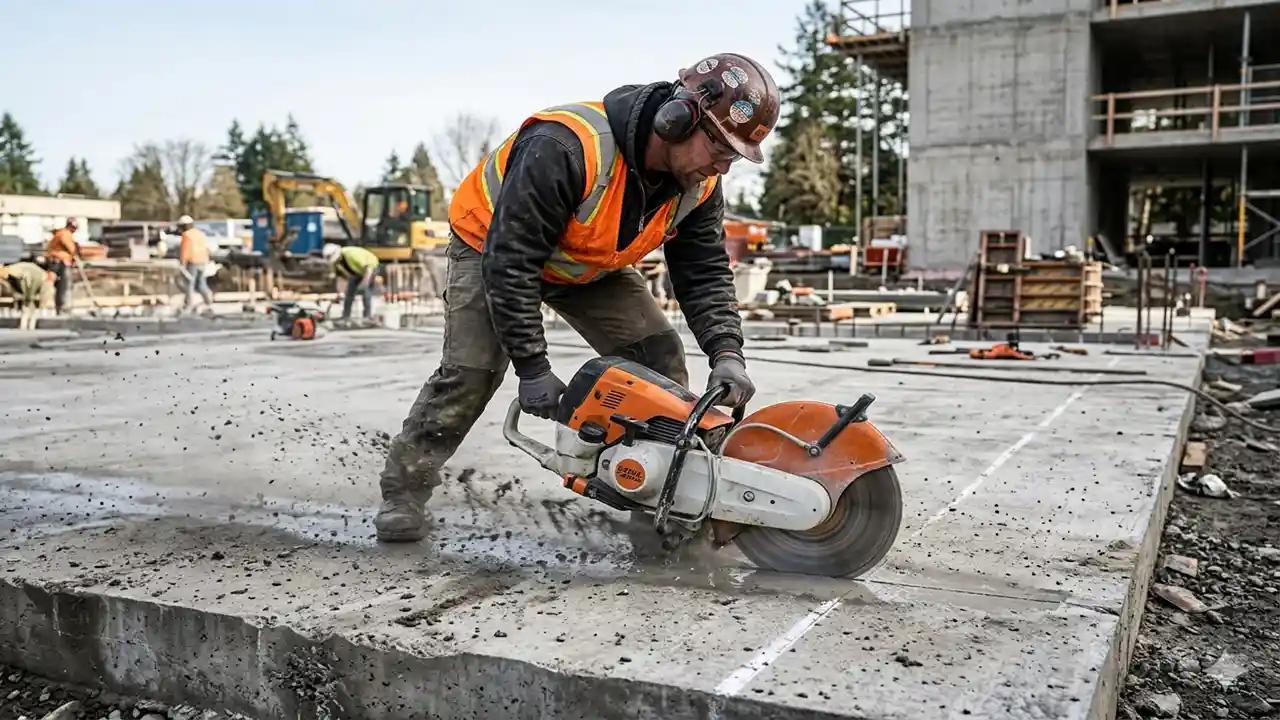
Handheld Power Cutters
These are the most common saws you’ll see on residential sites. Often powered by gas engines or high-voltage batteries, they are portable and perfect for cutting through pipes, blocks, or small sections of sidewalk.
Walk-Behind Saws
If you are tackling a large driveway or a long trench in a warehouse floor, you’ll want a walk-behind model. These resemble heavy-duty lawnmowers and allow the operator to stand upright, using the machine’s weight to create deep, straight cuts with minimal physical strain.
Cut-Off Saws vs. Table Saws
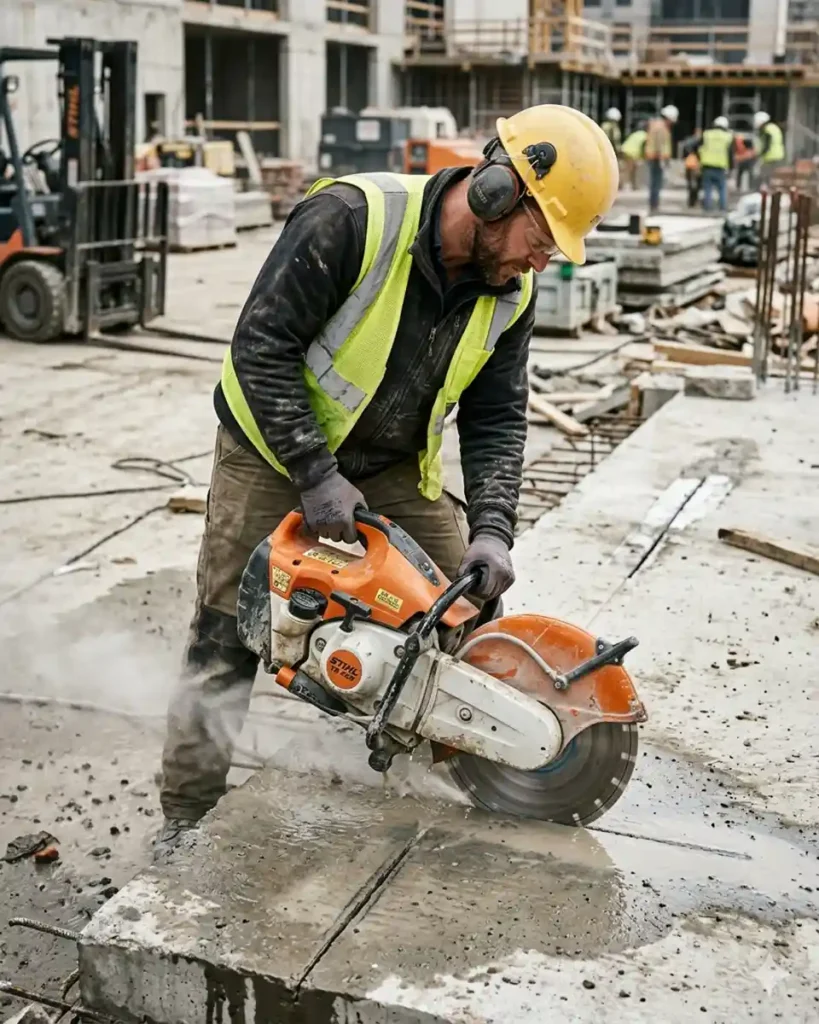
While cut-off saws are handheld and versatile, masonry table saws are used for smaller, precise items like bricks or paving stones. If your project involves intricate patterns, the table version is your best friend.
Concrete Mixer Rental: The Ultimate Guide for Your Next Project
Choosing the Right Blade for Your Concrete Saw
A saw is only as good as the blade attached to it. When dealing with cured concrete or masonry, you generally have two main choices.
Diamond Blades
For the most professional results, diamond blades are the gold standard. They don’t actually “cut” the material; they grind through it using synthetic diamond crystals embedded in the rim.
- Segmented Blades: Best for rough cuts and fast removal.
- Continuous Rim: Best for clean, chip-free finishes on tile or stone.
Corundum Abrasive Blades
These are much cheaper up-front but wear down quickly. They are essentially reinforced sandpaper disks. While they work in a pinch for a single small cut, they aren’t efficient for larger tasks where a concrete saw needs to maintain a consistent depth.
Concrete Mixer for Sale: The Ultimate Buyer’s Guide for Your Next Project
Wet Cutting vs. Dry Cutting: Which is Better?
One of the most common questions beginners ask is whether they should use water while cutting.
The Benefits of Wet Cutting
Most professionals prefer the wet method. Using a concrete saw with a constant stream of water serves two purposes:
- Dust Control: It turns the dangerous silica dust into a slurry, preventing it from entering your lungs.
- Heat Management: It keeps the diamond blade cool, extending its life significantly.
When to Dry Cut
Dry cutting is typically reserved for outdoor projects where water isn’t accessible or for very shallow, decorative cuts. If you choose this route, you must use a blade specifically rated for “dry use” and wear a high-grade respirator to protect against crystalline silica.
Step-by-Step: How to Operate a Concrete Saw Safely
Operating a concrete saw requires more than just pulling a trigger. Follow these steps to ensure a successful cut:
- Mark Your Line: Use a chalk line or a permanent marker. A saw won’t cut straight on its own; it needs a guide.
- Check Your Fluids: If using a gas saw, check the fuel-to-oil ratio. If using a wet saw, ensure your water source is steady.
- The “Score” Cut: Don’t try to cut through the entire slab in one pass. Make a shallow “score” cut first (about 1/2 inch deep) to establish the path.
- Let the Saw Do the Work: Never force the blade. Apply steady downward pressure, but let the rotation of the blade pull the machine forward. If the engine starts to bog down, back off slightly.
Pro Tip: Always wear hearing protection and steel-toed boots. A concrete saw is incredibly loud and handles heavy materials that can easily crush a toe if dropped.
The Ultimate Guide to the Concrete Saw: Master Your Next Projecthttps://t.co/ippFvygTiD
— Atholton News (@atholtonnews55) April 22, 2026
Essential Safety Gear and Silica Dust Awareness
Safety isn’t just a suggestion; it’s a requirement. The primary danger of using a concrete saw—aside from the spinning blade is silica dust.
- Respirators: An N95 mask is the bare minimum, but a fitted P100 respirator is highly recommended for dry cutting.
- Eye Protection: Wrap-around goggles are a must to protect against flying chips of stone.
- Gloves: Heavy-duty vibration-dampening gloves can prevent “white finger” syndrome during long hours of operation.
Common Mistakes to Avoid When Using a Concrete Saw
Even experienced DIYers can run into trouble. Here are the top three pitfalls to avoid:
- Twisting the Blade: Never turn the saw while the blade is in the cut. This can cause the blade to shatter or kick back violently.
- Ignoring the Blade Speed: Every blade has a maximum RPM (revolutions per minute). Ensure your concrete saw does not exceed the limit printed on the blade.
- Cutting Too Deep: If you hit the sub-base (dirt or gravel) beneath the concrete, you will dull your expensive diamond blade instantly. Always set your depth guard slightly shallower than the slab thickness.
Frequently Asked Questions
How deep can a standard concrete saw cut?
A standard 14-inch handheld concrete saw can typically cut to a depth of about 4.5 to 5 inches. For thicker slabs, you may need a specialized walk-behind saw with a larger blade diameter.
Can I use a wood saw blade on concrete?
Absolutely not. A wood blade will be destroyed instantly, and it poses a massive safety risk. Always use a dedicated masonry or diamond blade.
Is it better to rent or buy?
If you are doing a one-time patio project, renting is the way to go. Professional-grade saws are expensive to maintain. However, if you plan on doing multiple masonry projects a year, investing in a mid-range concrete saw can save you money in the long run.
Ready to Cut?
Mastering the concrete saw is a rite of passage for any serious renovator or construction worker. By choosing the right blade, respecting the power of the machine, and prioritizing safety, you can achieve professional-grade results on your own timeline.