



Why Painting Your Basement Floor is a Game Changer
Concrete floors in cellars are notorious for “dusting” the process where the concrete surface slowly breaks down into fine white powder. By painting cellar floor areas, you aren’t just making them look better; you are sealing the surface.
- Brighten the Space: Basements often lack natural light. A light-colored, satin, or semi-gloss finish reflects light, making the room feel larger.
- Easier Cleaning: Sealed floors don’t trap dirt and are much easier to sweep and mop.
- Moisture Control: While paint isn’t a substitute for professional waterproofing, high-quality masonry paints help manage minor dampness.
Choosing the Right Product for Painting Cellar Floor Surfaces
Not all paints are created equal. If you use standard wall paint, it will peel within weeks. You need something designed to withstand foot traffic and the unique alkaline environment of concrete.
1. Epoxy Paint (The Durable Choice)
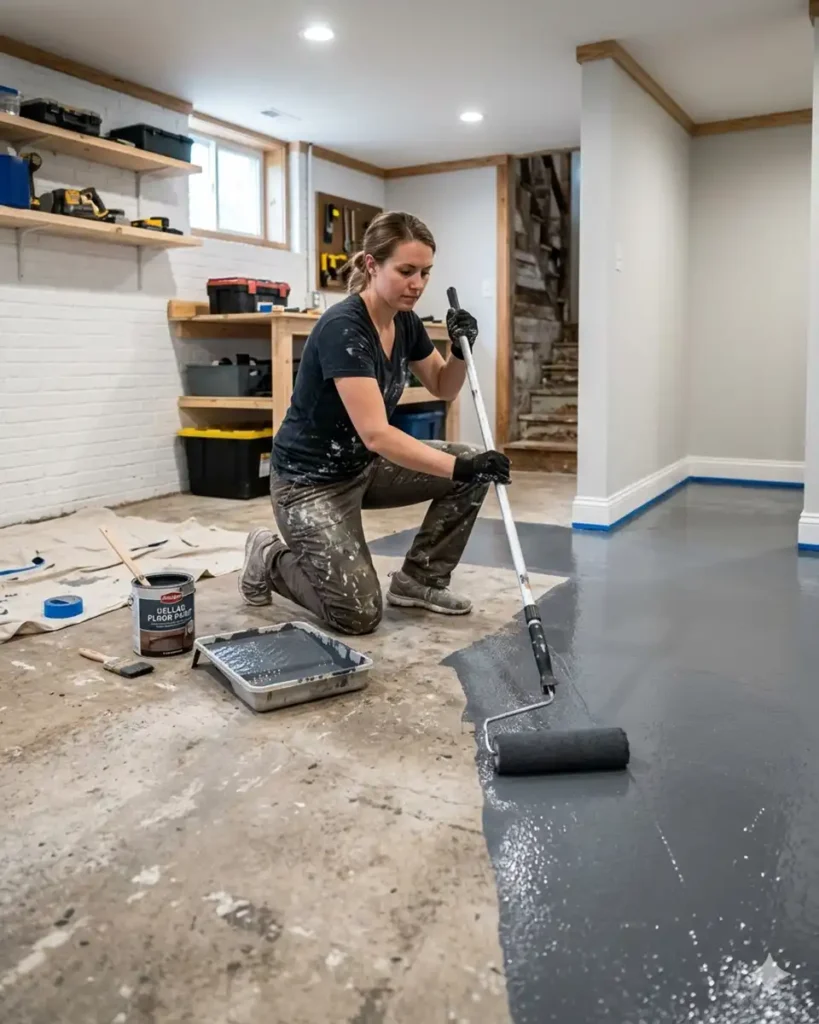
Epoxy is the gold standard for painting cellar floor projects. It’s a resin-based coating that creates a hard, durable shell. It is highly resistant to chemicals, spills, and impact.
Building Mercy Health West with Precast Concrete: A Modern Construction Approach
2. Concrete Stains
If you prefer a natural, marbled look rather than a solid color, stains are a great option. They soak into the concrete rather than sitting on top, which prevents peeling.
3. Water-Based Latex Floor Paint
This is the most user-friendly option. It dries quickly and has low odors (crucial for poorly ventilated cellars). While not as tough as epoxy, it’s perfect for low-traffic storage areas.
Step 1: The Essential Moisture Test
Before you even pick up a brush, you must check for moisture. Concrete is porous; if water is pushing up through the slab, your paint will bubble and flake.
The Plastic Sheet Test:
Tape a $2′ \times 2’$ piece of clear plastic to the floor, sealing all edges with duct tape. Wait 48 hours. If there are water droplets under the plastic or the concrete looks darker, you have a moisture issue that needs to be addressed with a specialized sealer before painting cellar floor zones.
Step 2: Preparation is 90% of the Job
The biggest mistake DIYers make when painting cellar floor areas is rushing the prep. Paint needs a clean, “profiled” surface to grip onto.
- Clear the Room: Remove every item. This is a great time for a “decluttering” session.
- Degrease: Use a heavy-duty degreaser to remove oil or grease spots.
- Etching: Use a mild acid etch (often included in epoxy kits) to open the pores of the concrete. It should feel like fine-grit sandpaper when you’re done.
- Repair Cracks: Use a concrete filler to patch any hairline fractures or pits.
The Ultimate Guide to Concrete Sealer: Protecting and Enhancing Your Surfaces
Step 3: Application Techniques for a Professional Look
When you are finally ready for painting cellar floor surfaces, timing and temperature matter. Aim for a day when the humidity is low.
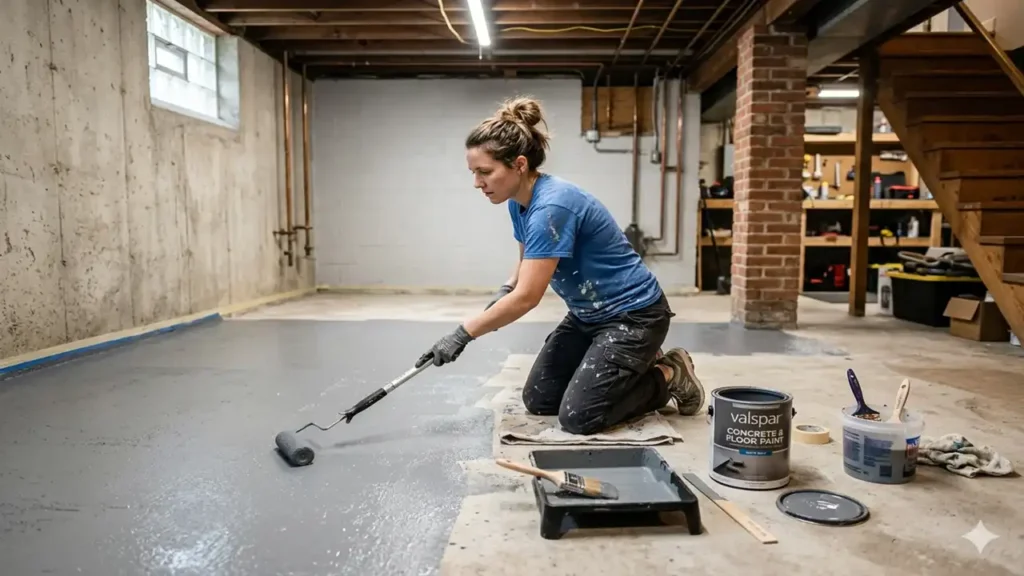
- Cut in the Edges: Use a high-quality brush to paint a 2-inch border around the perimeter and around any poles or water heaters.
- Roll the Main Area: Use a long-handled roller with a 3/8-inch nap. Work in small sections (about $4′ \times 4’$), maintaining a “wet edge” to avoid visible lines.
- Two Coats are Mandatory: The first coat often acts as a primer. The second coat provides the depth of color and the protective seal. Wait at least 24 hours between coats.
Common Challenges and How to Fix Them
Painting cellar floor projects can hit a few snags. If your paint feels tacky days later, the humidity is likely too high; run a dehumidifier. If the paint starts to lift in a specific spot, it’s usually because of an invisible oil stain that wasn’t fully cleaned during prep. Simply sand the area, re-clean, and touch it up.
FAQ
How long does it take to paint a cellar floor?
Typically, the process takes 3 to 4 days: one day for deep cleaning and etching, one day for drying, and two days for applying coats.
Can I paint over old paint?
Yes, but only if the old paint is well-adhered. You must sand the old finish to “scuff” it so the new layer can bond. If the old paint is peeling, it must be stripped entirely.
Intermountain Concrete Specialties SLC: Your Ultimate Guide to Professional Concrete Supplies
What is the best color for a basement floor?
Light grays and tans are the most popular. They hide dust better than white but still brighten the room significantly.
Transform Your Home Today
Painting cellar floor surfaces is one of the most rewarding DIY projects you can tackle. It transitions a space from a “scary basement” to a functional part of your home. By following the proper prep steps and choosing a high-quality epoxy or latex-floor paint, you’ll enjoy a beautiful finish for years to come.
Leave a Reply