Industrial warehouse construction is shifting toward smarter, faster, and more sustainable methods.
As developers seek to maximize ROI, our team observes a clear trend favoring high-performance structural systems.
If you have been following precast concrete and structural framing trends across the Midwest, this won’t come as a surprise.
Key Takeaways
- Speed of Delivery: Utilizing precast elements can accelerate project timelines by up to 60% compared to traditional site-cast methods.
- Structural Integrity: Modern connection detailing ensures these structures meet rigorous seismic and gravity load standards.
- Waste Reduction: Factory-controlled fabrication reduces construction site waste by over 15% on average.
CITB Construction Skills Practice Test
How does precast impact your bottom line?
Construction industry insiders are noting that the upfront investment in high-quality materials often translates to massive long-term savings.
Our analysis suggests that for industrial warehouse construction, the predictability of factory-manufactured components minimizes costly on-site delays.
When components arrive pre-cured, your team avoids the weather-related setbacks that plague traditional construction timelines.
According to data from the National Institute of Standards and Technology, professional design standards are evolving to better accommodate these composite systems.
We have found that incorporating structural framing early in the design phase allows for tighter tolerances.
This precision is critical for the expansive floor plans typical of modern industrial warehouse construction.
Illegal Construction by Neighbour Precast Solutions
| Feature | Precast Concrete | Traditional Cast-in-Place |
| Speed | High (Off-site fabrication) | Moderate (Requires curing) |
| Waste | Low (Factory controlled) | High (Formwork debris) |
| Consistency | High (Controlled environment) | Variable (Field conditions) |
| Labor | Reduced on-site needs | High on-site requirements |
What steps ensure a successful site installation?
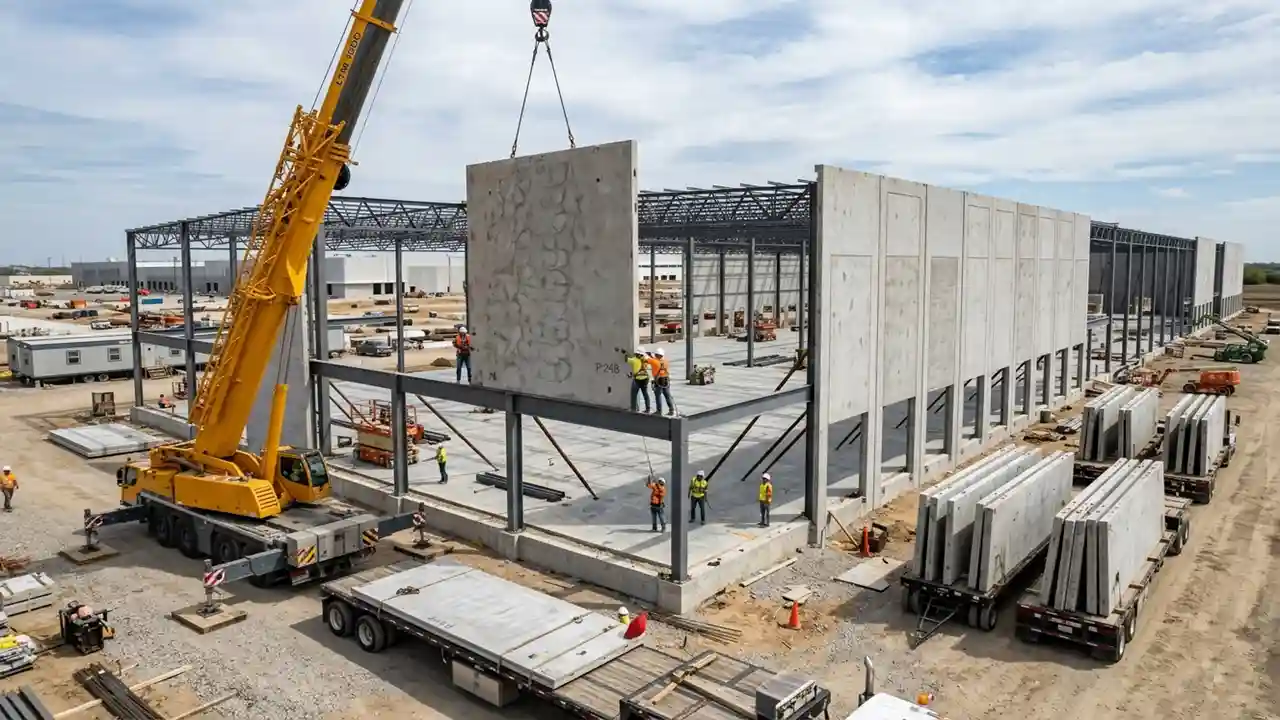
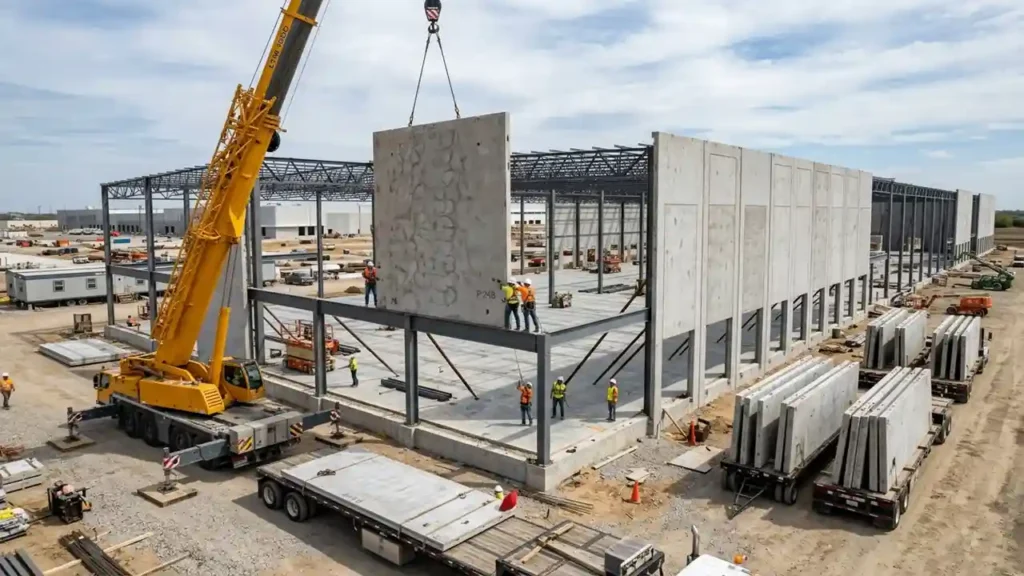
If you are planning your next industrial warehouse construction project, follow this professional workflow for precast concrete assembly.
Proper preparation is the most important factor for success.
- Preparation: Clear the site access routes and ensure crane placement pads are compacted to support heavy lifting equipment.
- Surveying: Verify all embedded steel plates and anchor bolts against the final structural drawings before the arrival of components.
- Lifting: Securely attach rigging to manufacturer-certified lifting inserts, ensuring the center of gravity is maintained during the swing.
- Alignment: Set the panel into position using shims to achieve precise vertical and horizontal alignment.
- Connection: Execute the weld or mechanical bolting according to the engineered connection schedule to secure the frame.
Found My Daddy at a Construction Site Perimeter Systems
Industrial Warehouse Construction Precast Efficiency
— US News (@Us_news_ways) June 5, 2026
Industrial warehouse construction is shifting toward smarter, faster, and more sustainable methods.@ConstWorldSA @4ConstructnPros @EngineeringEX https://t.co/hgp74IGBd6
Why should Midwest contractors prioritize this method?
The labor market is tightening, making efficiency in industrial warehouse construction more vital than ever.
By relying on precast wall panels and structural systems, our contractors note that they can finish projects with smaller, more specialized crews.
This shift toward precast concrete also aligns with broader industry goals for low-carbon building practices (as discussed in recent reports from Frontiers in Mechanical Engineering).
If you are wondering how this will impact your next build, consider the durability of the final product.
Structural framing components produced in a plant setting offer superior density and finish quality.
This quality control is nearly impossible to replicate with traditional construction methods in the unpredictable Midwest climate.
Industrial Building Construction Company Strategies
Looking ahead at construction technology
We believe the future of the industry lies in the seamless integration of digital planning and physical precast concrete manufacturing.
As noted by research from Western Sydney University, the move to prefabrication is essential for sector performance.
We continue to advocate for industrial warehouse construction strategies that prioritize modularity and long-term asset recoverability.
When you invest in these systems, you are not just building a shell; you are creating a high-performance, resilient infrastructure asset.
Our team is here to help navigate the technical requirements of your upcoming project.
Let’s build the next generation of logistics facilities with the precision that the modern market demands.