


Precast concrete offers a smart way to create strong curbs through curb casting. This method builds durable edges for roads, parking lots, and outdoor spaces using factory-made units.
What is Curb Casting?
Curb casting involves pouring concrete into molds to form curbs off-site. These precast units get cured in controlled settings before transport to the job site.
In curb casting with precast concrete, workers mix high-strength concrete with aggregates and reinforcement like rebar. The mix goes into reusable molds shaped for straight, curved, or mountable curbs.
This approach beats on-site pouring by cutting weather risks and ensuring uniform quality. Factories control temperature and moisture for better strength, often reaching 25-35 MPa compressive power.

Key Benefits
Precast curb casting saves time since units arrive ready to install. Projects finish faster as casting happens parallel to site prep like earthwork.
Units resist cracking better than site-poured curbs. Off-site molds block water seepage during curing, key in harsh weather like Alberta winters.
They lower long-term costs with less maintenance and high durability up to 50 years. Precast curbs handle vehicle impacts, freeze-thaw cycles, and de-icing salts well.
Safety improves as curbs guide traffic, prevent overshoots in parking lots, and protect pedestrians. Custom finishes add skid resistance and looks.
Sustainability grows with recycled materials in mixes and less waste from factory efficiency. 2026 trends show more eco-friendly admixtures and automation.
The Manufacturing Process
Curb casting starts with mold setup. Steel or plastic forms get oiled for easy release and filled with reinforced concrete.
Vibration compacts the mix for density without air pockets. Then, curing begins wet burlap, steam, or compounds keep moisture in for 7 days minimum.
Demolding follows once strength builds. Workers inspect, fix air holes, and apply finishes like bush-hammered or exposed aggregate.
Marking adds maker ID and cast date per standards. Units stack for transport, using slings to avoid chips.
2026 updates include robotic placement and smart molds for curves, boosting speed and custom shapes at The Precast Show events.
Installation Steps
Site prep digs a trench 6-8 inches deep and wide. Add 2 inches of compacted gravel base for stability.
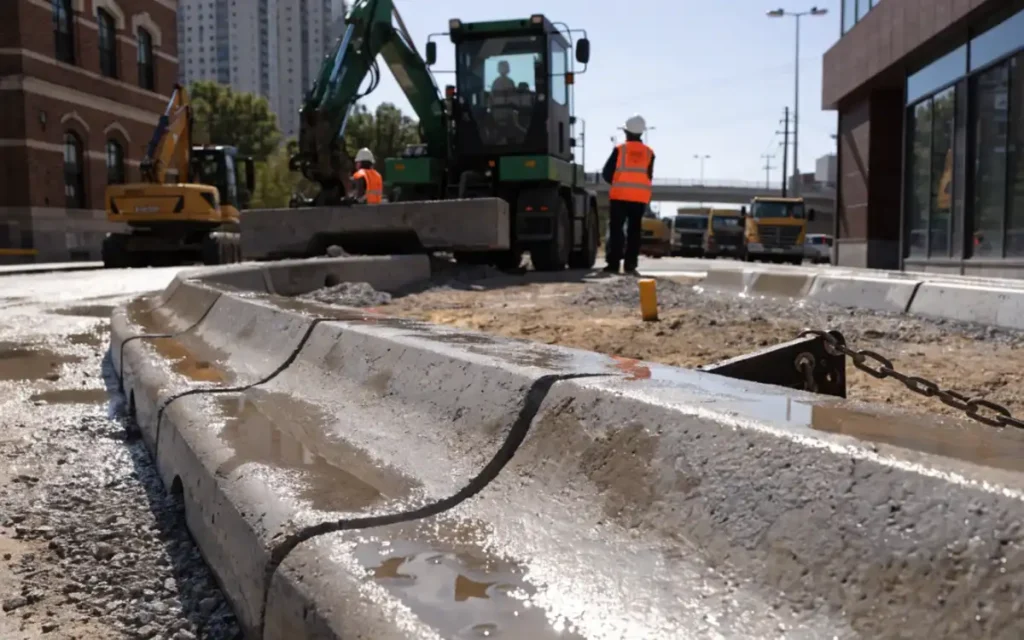
Cranes place units end-to-end, tapping with mallets for level fit. Interlocking joints or mortar seals gaps of about 5mm.
Anchor with dowels if needed, then backfill and compact soil. Check alignment with lasers for smooth flow.
Full install cuts traffic disruption versus wet concrete. Pros handle delivery, pinning, and cleanup.
Types of Precast Curbs
Straight curbs define edges on roads. Mountable ones allow vehicle crossovers in lots.
Curved units fit roundabouts, guiding traffic safely. Vertical types block cars from sidewalks strongly.
Reveal curbs add shadow lines for style in plazas. Drop curbs aid drainage to inlets.
precast concrete, precast, block wall, Outdoor Space.

Comparison Table: Precast vs. Cast-in-Place Curbs
| Feature | Precast Concrete Curb Casting | Cast-in-Place |
| Production Time | Off-site parallel work, faster overall | On-site sequential, slower |
| Quality Control | Factory monitored, consistent strength | Weather/site variables, risks cracks |
| Durability | High, 30-50 years low maintenance | Variable, prone to defects |
| Installation Speed | Quick placement, minimal disruption | Days to cure, traffic delays |
| Cost Long-Term | Lower due to efficiency and lifespan | Higher from repairs |
| Customization | High with molds, textures, curves | Limited by site conditions |
This table shows why precast leads in modern projects.
Applications Across Projects
Roads and highways use straight and vertical curbs for edges and drainage. They handle heavy loads and erosion.
Parking lots get mountable or parking stops to organize spaces and stop overshoots. Businesses see safer flow.
Residential driveways and paths boost curb appeal while fighting soil wash. They raise property value up to 15%.
Public plazas and parks employ reveal or kerb stones for looks and safety. Airports need them for taxiways against jet blast.
Industrial sites protect docks from trucks. Coastal roads resist salt with special mixes.
Block walls pair with curbs in outdoor space designs for fences or retainers.
2026 Updates and Innovations
Precast hits new highs in 2026 with robotics for rebar and molds. Digital tools allow fast custom prototypes.
Events like The Precast Show in February spotlight sustainable mixes and IoT monitoring for strength.
Automation cuts errors, speeds cycles. Smart systems track curing for peak quality.
Resilience grows for disasters FEMA uses concrete panels curbs in shelters. Expect more recycled content and energy-efficient plants.
Maintenance Tips
Inspect yearly for cracks or shifts. Seal joints against water and salts.
Clean debris from reveals or drops to aid drainage. Repair chips promptly with mortar.
In cold areas, air-entrained mixes prevent spalling. Low upkeep keeps them like new for decades.
Conclusion
Curb casting with precast concrete delivers tough, quick, and green solutions for edges everywhere. From roads to outdoor space, it shines in benefits like speed and strength.
For Repair and Services
1924 W Edward Ln, Milwaukee, WI 53209, United States
Phone: +14142855933
Email: [email protected]
Leave a Reply