


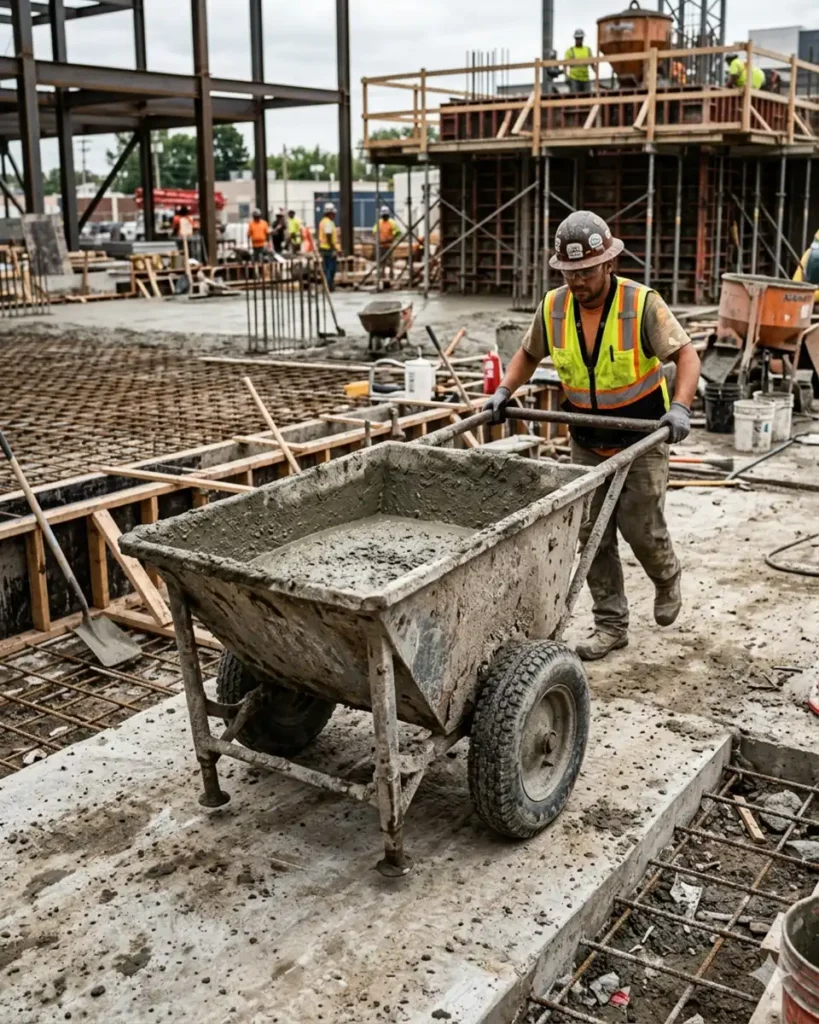
Have you ever stared at a massive concrete buggy pour and dreaded the endless parade of wheelbarrows? In the construction industry, time is money, and physical fatigue is a real hazard. Contractors today are facing tight deadlines, rising labor costs, and ongoing worker shortages. Whether you are laying a residential foundation, building a sprawling driveway, or navigating tight backyard spaces, moving heavy materials efficiently is absolutely crucial for your bottom line.
That is exactly where upgrading your site equipment changes the game. Transitioning from manual labor to motorized transport can shave hours off a project and save your crew’s backs. In this comprehensive guide, we will dive deep into everything you need to know about maximizing productivity on site. You will learn the core differences between various models, how to maintain your machinery, and why renting or buying the right concrete buggy might just be the best decision for your contracting business.
What is a concrete buggy?
Featured Snippet Target: A concrete buggy is a motorized piece of construction equipment designed to transport heavy materials like cement, gravel, and dirt across job sites. Also known as a power buggy, it typically features a large bucket or tub mounted on a wheeled or tracked frame, driven by a reliable gas or battery-powered engine.
Think of this equipment as a supercharged wheelbarrow. Instead of relying on brute manual labor to push hundreds of pounds of wet mix through thick mud, the machine does the heavy lifting for you. This allows a single operator to move up to a cubic yard of material in a fraction of the time, drastically reducing physical strain and labor overhead. Most units feature a reinforced poly or steel tub that can handle heavy daily abuse without cracking.
Types of Power Buggies on the Market
When researching these machines, you will quickly notice they come in two main undercarriage styles. Your choice depends heavily on your typical working conditions and terrain.
Curb Casting with Precast Concrete: Benefits, Process & Applications
Wheeled Models
Wheeled models are fantastic for hard, relatively flat surfaces. If you are working on established pavement, solid dirt, or large commercial floors, these units offer superior speed and agility. They turn quickly and can zip back and forth from the mixer truck to the pour site with ease. Many wheeled units offer dual tires on the front to help distribute weight, and operators can often choose between air-filled (pneumatic) or foam-filled tires to prevent job site punctures.
Tracked Models
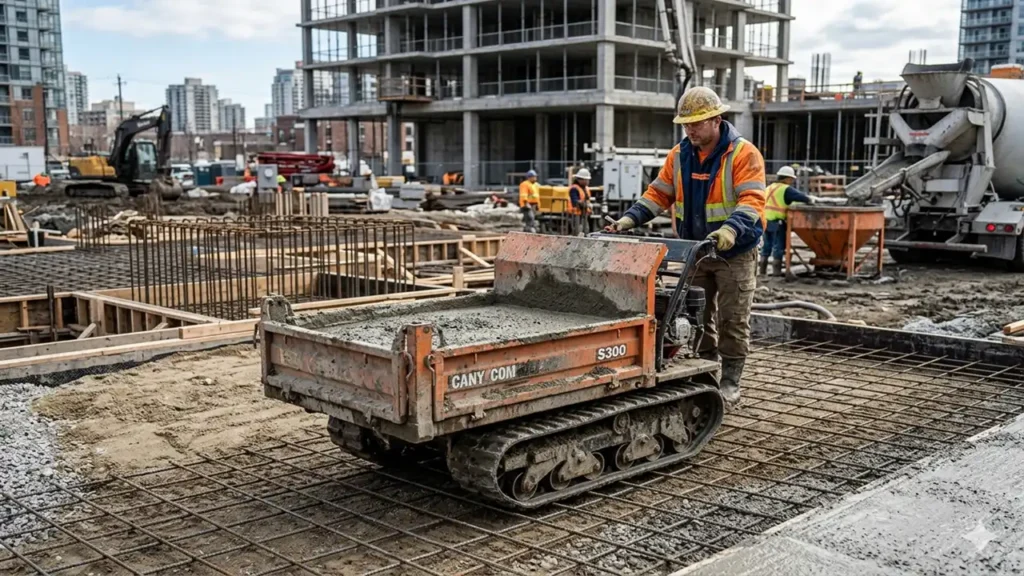
If your job site involves deep mud, loose gravel, steep inclines, or delicate landscaping, a tracked concrete buggy is your absolute best bet. The continuous tracks distribute the machine’s immense weight over a much larger surface area. This lowers the ground pressure, preventing the unit from sinking into soft ground or tearing up a client’s pristine lawn. While they offer superior traction and stability, they do tend to move slightly slower than their wheeled counterparts.
Stand-On vs. Walk-Behind
Beyond the base, you will also see variations in operator position. “Stand-on” models feature a small fold-down platform at the back. The operator rides along with the load, which drastically reduces walking fatigue over long shifts and offers a great vantage point for driving. “Walk-behind” models require the operator to walk closely behind the machine, which can be useful in exceptionally tight spaces with low overhead clearance.
Top Benefits of Upgrading Your Fleet
Still on the fence about whether to invest in motorized transport? Here is why seasoned contractors swear by them:
- Massive Productivity Boost: A standard wheelbarrow holds about 2 to 3 cubic feet of material. Motorized buggies can hold anywhere from 16 to 21 cubic feet. That means one single trip accomplishes what would normally take seven or eight trips by hand.
- Enhanced Worker Safety: Back injuries are a leading cause of downtime and worker compensation claims in construction. By removing the need to manually lift, push, and dump heavy loads, you protect your crew from long-term wear and tear.
- Unmatched Maneuverability: Heavy mixer trucks often cannot fit into narrow residential backyards or tight city alleys. These compact material handlers bridge the gap between the street and the pour location without requiring you to tear down fences or damage private property.
- Ultimate Versatility: While built for wet cement, these machines are not one-trick ponies. They are heavily utilized for hauling mulch, decorative river rock, sand, and demolition debris.
How to Choose the Right Equipment for Your Project
Choosing the right machine requires looking closely at your specific operational needs. Keep these core factors in mind:
Payload Capacity
How much material do you need to move per hour? Smaller residential jobs might only require a 16-cubic-foot tub. Massive commercial flatwork pours, however, demand the largest available 21-cubic-foot models to keep up with the continuous flow of the mixer truck.
Power Source
Gas-powered engines (often Honda or similar reliable brands) remain the industry standard for sheer power, longevity, and easy refueling. However, battery-powered electric models are rapidly gaining popularity. Electric options run silently and produce zero emissions, making them perfect for indoor projects or noise-restricted neighborhoods.
Concrete Cleaning Near Me: The Ultimate Guide to Restoring Your Surfaces
Dump Mechanism
Look for a concrete buggy with a smooth, responsive hydraulic dump system. High-quality hydraulics give the operator precision control when pouring footings or filling narrow forms. This minimizes spillage, reduces wasted material, and cuts down on frustrating cleanup time. [Internal Linking Opportunity: Link to your article on “Understanding Hydraulic Systems in Construction Equipment”]
Maintenance Tips for Longevity
To get the best return on your investment, routine maintenance is completely non-negotiable. Implementing a daily checklist ensures your machine starts up reliably every morning.
- Daily Cleaning: Never let cement dry in the tub! Wash out the bucket thoroughly at the end of every shift using a high-pressure hose. Pro-tip: Spray the inside of the tub with a specialized releasing agent or a light coat of form oil before loading to make cleanup effortless.
- Inspect Tracks and Tires: Check tire pressure daily on wheeled units to ensure load stability. For tracked units, carefully clear out rocks, mud, and debris from the undercarriage to prevent track derailment and premature wear.
- Hydraulic and Engine Care: Just like your personal truck, your machinery needs regular oil changes, air filter replacements, and spark plug checks. Frequently inspect hydraulic hoses for leaks or fraying, and always follow the manufacturer’s recommended service schedule.
FAQ
How much weight can these machines hold?
Most standard models can handle between 1,500 and 2,500 pounds of material per trip. Always check the specific manufacturer’s load limit plate on your unit to ensure safe operation.
Can I use a motorized buggy for landscaping?
Absolutely! They are incredibly versatile. Landscapers frequently use them to transport mulch, topsoil, retaining wall blocks, and large tree root balls across delicate turf without causing rutting.
Do I need a special license to operate a concrete buggy?
No special state or federal driver’s license is required. However, proper on-site training regarding safe operation, load balancing on hills, and hydraulic controls is highly recommended to prevent accidents.
What happens if cement dries in the tub?
If material accidentally cures inside the bucket, you will need to carefully use a chipping hammer or a heavy-duty chemical concrete dissolver. Avoid hitting poly tubs too hard, as extreme impacts can cause the plastic to crack.
Final
In today’s fast-paced construction industry, relying on outdated manual labor methods is a quick way to fall behind schedule, lose bids, and burn out your hardworking crew. Investing in motorized transport solutions transforms the way you handle heavy materials, bringing incredible efficiency, safety, and speed to every single pour. Whether you choose a nimble wheeled unit for urban hardscapes or a rugged tracked model for muddy housing developments, the return on investment is undeniable.
By accurately assessing your site conditions, selecting the right concrete buggy for your specific needs, and keeping up with basic daily maintenance, you will keep your projects running smoothly and profitably for years to come.
Leave a Reply