



Introduction
In modern construction, one of the most important choices is which type of cement to use in concrete. Different types of cement change how quickly concrete sets, how strong it becomes, and how sustainable the structure is over time. Among these types, CIIIB is a special cement class that you will often see in European‑style concrete specifications and technical documents.
In this guide, you will learn what CIIIB means in construction, how it is made, where it is used, and why engineers and contractors choose it on real‑world projects. We will also look at how CIIIB fits into broader trends like low‑carbon concrete, precast concrete walls, and energy‑efficient construction in 2026.
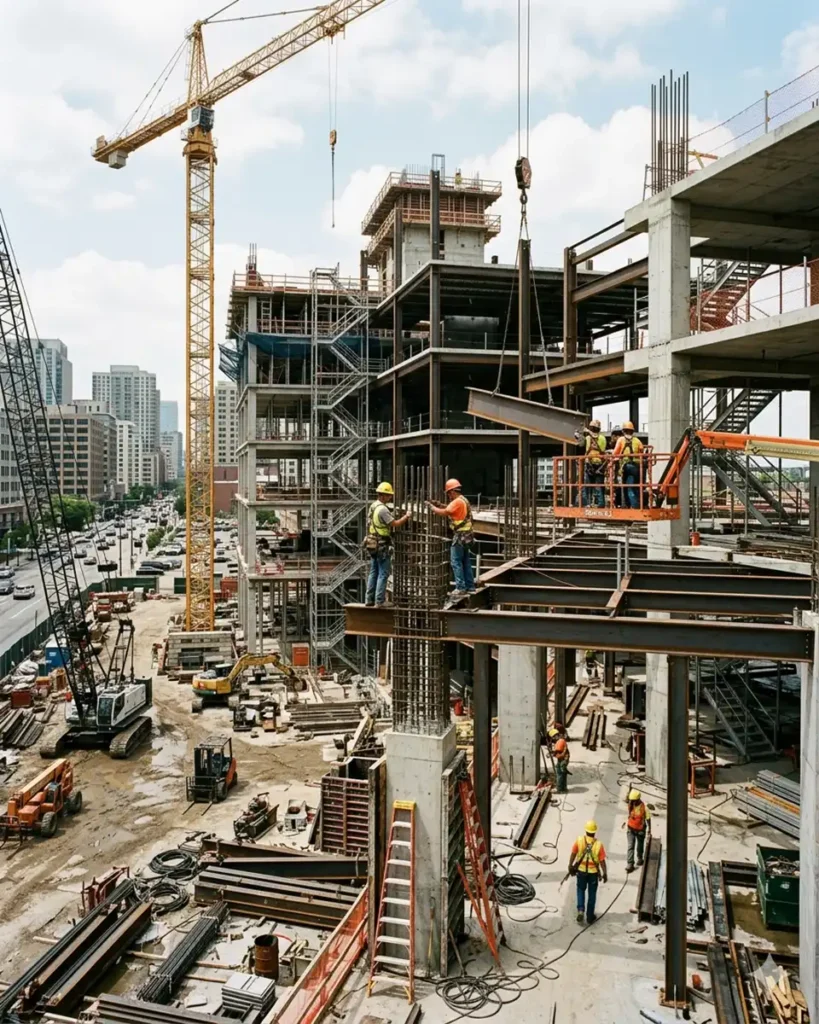
What does “CIIIB” mean?
In construction, CIIIB is short for a specific cement type under the European cement standard EN 197‑1. It is not a brand name; it is a technical classification that tells you the composition of the cement.
A CIIIB cement is a composite cement made mostly from Portland cement (OPC) plus a very high amount of ground‑granulated blast‑furnace slag (GGBS). In simple terms:
- C = cement
- II = cement with a main component other than clinker (in this case, GGBS)
- B = medium‑to‑high proportion of that secondary component
- III = the secondary component is blast‑furnace slag
So CIIIB can be read as:
“A composite Portland‑slag cement with a high proportion of slag.”
This meaning of CIIIB is fixed; it is part of the EN standard and does not change from language to language, even though the label may be written differently in local documents.
How is CIIIB cement made?
CIIIB cement is produced in a concrete‑ or cement plant by blending:
- Ordinary Portland Cement (OPC) clinker – the main “cement part” that gives early strength.
- Ground‑granulated blast‑furnace slag (GGBS) – a by‑product of steel production, finely ground into a cement‑like powder.
Typical proportions for CIIIB are:
- OPC clinker: about 20–34%
- GGBS: about 66–80%
This high‑slag mix is why CIIIB is sometimes described as a very‑high‑slag cement. The exact mix is carefully controlled so that the final cement meets the strength and durability requirements of the European standard.
The production process is energy‑efficient compared with pure OPC because:
- Less clinker is needed (clinker production is very energy‑ and CO₂‑intensive).
- GGBS is a recycled industrial by‑product, so using it reduces waste.
Because of this, CIIIB fits well into low‑carbon and sustainable‑construction strategies that are growing in 2026.
Technical properties of CIIIB concrete
When engineers use CIIIB cement in construction, they care about four main properties:
- Strength development
- Durability
- Heat of hydration
- Workability and setting time
Strength and setting time
CIIIB concrete usually gains strength more slowly than pure OPC concrete. Because so much clinker is replaced with slag, the early‑age strength (1–3 days) is lower. However, over time often after 28 days and later CIIIB concrete can match or even exceed the long‑term strength of ordinary concrete.
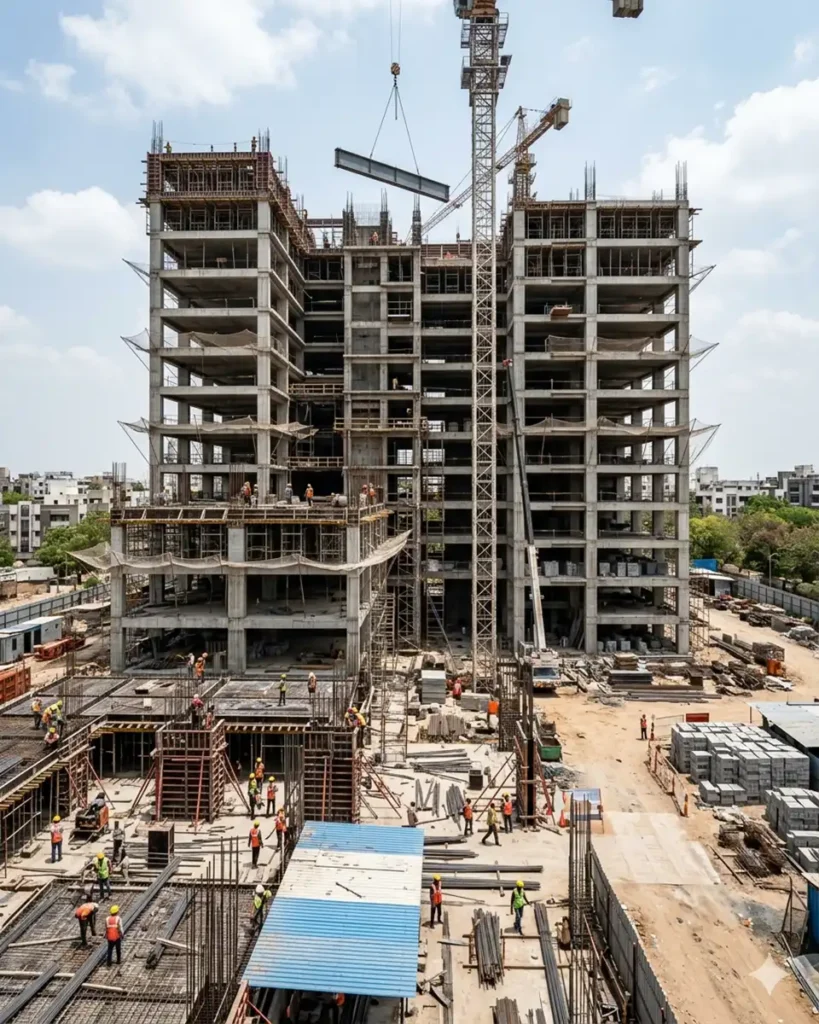
This means:
- For mass concrete structures (big foundations, dams, retaining walls), the slower strength gain is usually acceptable.
- For structures needing very fast early strength (rush‑cast elements, aggressive programs), engineers may prefer lower‑slag or pure OPC.
Durability and resistance
CIIIB concrete is often chosen where durability matters more than speed:
- High resistance to chloride attack – useful in marine structures, parking structures, and coastal buildings.
- Better resistance to sulphate attack – important in soils or groundwater with high sulphate content.
- Lower permeability, which helps reduce carbonation and corrosion of steel reinforcement.
These properties make CIIIB a good choice for underground structures, tunnels, water‑retaining structures, and long‑life infrastructure.
Heat of hydration
One of the biggest advantages of CIIIB is its low heat of hydration. When ordinary cement hydrates, it releases a lot of heat, which can cause thermal cracking in thick sections. By replacing a large part of the clinker with GGBS, CIIIB reduces that heat, so:
- Fewer temperature‑induced cracks.
- Safer casting for mass concrete such as bridge piers, retaining walls, and large foundations.
This is one reason why CIIIB is popular in precast concrete wall and precast concrete panels for large‑scale projects.
Where is CIIIB used in construction?
CIIIB cement is not used in every concrete job; it is selected for specific applications where its special properties are needed. Common uses include:
- Foundations and basements – especially in aggressive soil or groundwater conditions.
- Marine and coastal structures – seawalls, jetties, offshore foundations.
- Tunnels and underground structures – where low permeability and sulphate resistance are important.
- Large‑volume castings – thick slabs, rafts, and retaining walls where low heat of hydration is critical.
- Precast concrete walls and panels – durable, long‑life elements for buildings, retaining systems, and barriers.
In the context of precast concrete walls, CIIIB helps because:
- The panels can be cast in a controlled factory environment, so slower early‑age strength is not a big problem.
- The long‑term durability and low‑heat properties mean the wall will last longer with less cracking and less maintenance.
Thus, when project teams talk about strong, thin, yet durable concrete panels, CIIIB‑based mixes are one of the smart options that have been used more widely since around 2024–2026.
CIIIB and low‑carbon / sustainable construction (2026 update)
In 2026, sustainability and low‑carbon design are major drivers in the concrete and construction industry. Many governments and developers are pushing for lower‑carbon concrete to meet net‑zero or near‑zero‑carbon targets. CIIIB is a natural fit in this direction.
Key 2026‑relevant points:
- Using 66–80% GGBS in CIIIB reduces the amount of clinker needed, which directly lowers CO₂ emissions per tonne of cement.
- Several large infrastructure programs in Europe and India now include low‑carbon concrete specifications, and CIIIB‑type composite cements are part of those toolkits.
- Market reports show that the global construction sector is shifting toward high‑slag and blended cements as part of a broader strategy to decarbonise concrete.
In short, CIIIB is not just a technical label; it is also a sustainability‑friendly choice when planning long‑life, low‑maintenance, and climate‑conscious structures in 2026 and beyond.
How CIIIB compares to other cement types
To understand where CIIIB sits, it helps to compare it with a few common cement classes. The table below shows key differences in simple terms.
| Cement type | Main composition | Typical slag % | Early strength | Long‑term strength | Best‑fit use |
| CEM I (OPC) | Nearly all clinker | 0% | Very high early strength | Good long‑term | Fast‑track projects, normal structural concrete |
| CIIA / CIIB | OPC + low‑to‑medium GGBS or limestone | ~11–35% GGBS | Medium early strength | Good | General buildings, roads, many standard works |
| CIIIA | OPC + GGBS (medium‑high) | ~36–65% GGBS | Moderate early strength | High long‑term | Works needing better durability than OPC |
| CIIIB | OPC + GGBS (high) | ~66–80% GGBS | Slower early strength | Very high if properly cured | Mass concrete, marine structures, precast concrete walls, low‑carbon builds |
| Other blended cements (CIIC‑SL, CVI‑SL) | OPC + GGBS + limestone | Varies, blended with limestone | Varies with mix | Generally good | Custom‑designed mixes for specific carbon or performance targets |
From this table you can see that CIIIB sits at the “high‑slag” end, trading early speed for better durability, lower heat, and lower CO₂. This makes it a premium choice for projects where the owner cares about lifespan and lifecycle cost, not just how fast the concrete hardens.
CIIIB and construction practices on site
Using CIIIB correctly on a construction site means paying attention to a few practical points:
- Curing time is more important – because strength develops slowly, longer and more careful curing (keeping concrete moist and at stable temperature) is essential. Wet curing or curing membranes are often preferred.
- Formwork and striking times – formwork may need to stay in place longer than with OPC‑based concrete, especially for vertical elements like walls or columns.
- Temperature control – even though CIIIB has low heat, cold weather can further slow setting; so winter‑concreting measures (heating, insulation, retarding/accelerating admixtures) may be needed.
For precast concrete wall and precast concrete panels, many plants already use slow‑setting, Contractionary fiscal policy and have the equipment to control temperature and curing. This helps CIIIB‑based elements perform well without slowing down the overall production line too much.
CIIIB in the context of wider construction trends
Beyond the technical details, CIIIB fits into several important trends in construction in 2026:
- Low‑carbon concrete push – Governments and developers are increasingly requiring low‑carbon or net‑zero concrete specifications, where CIIIB‑type cements are recommended.
- Long‑life infrastructure – In India and many other countries, current infrastructure plans emphasize long‑lifespan, low‑maintenance structures, where CIIIB’s durability pays off.
- Digital and BIM‑driven design – Modern building information modelling (BIM) allows engineers to simulate heat‑of‑hydration and long‑term performance, so they can justify using CIIIB‑based mixes even in complex geometries like concrete walls and panels.
In this light, CIIIB is not just a material choice; it is part of a broader move toward smarter, greener, and more durable construction.

When not to use CIIIB
Despite its advantages, CIIIB is not the right choice for every project. You should think twice before using it when:
- Shuttering or supports must be removed very quickly (within 1–3 days).
- The project is in a very cold climate without proper curing facilities, because hydration will slow too much.
- The design is based on very high early‑age strength assumptions (for example, fast‑track prestressed elements that need high strength almost immediately).
In such cases, engineers may choose:
- CEM I (OPC) for speed, or
- CIIIA or CIIB as a middle‑ground option with some slag but still faster early strength than CIIIB.
Conclusion
In construction, CIIIB is a clearly defined cement class that combines ordinary Portland cement with a high proportion of ground‑granulated blast‑furnace slag. It is particularly useful where durability, low heat of hydration, and lower carbon footprint matter more than very fast early strength.
Thanks to recent market and regulatory trends in 2026, CIIIB is gaining more attention for mass concrete, marine work, tunnels, and precast concrete walls and panels. When specified and used correctly, it supports longer‑lasting, safer, and more sustainable structures without changing the basic rules of concrete construction just upgrading the material behind the concrete panels.
For Repair and Services
1924 W Edward Ln, Milwaukee, WI 53209, United States
Phone: +14142855933
Email: [email protected]
Leave a Reply