



Precast concrete box culverts are key players in modern infrastructure projects. They help manage water flow under roads and railways with speed and strength.
Ready to explore how these structures save time and money? Let’s dive in.
What Is a Box Culvert?
A box culvert is a rectangular, tunnel-like structure made of concrete. It lets water, utilities, or even pedestrians pass under roads, railways, or embankments. Precast versions are factory-made in controlled settings, then shipped to the site for quick assembly.
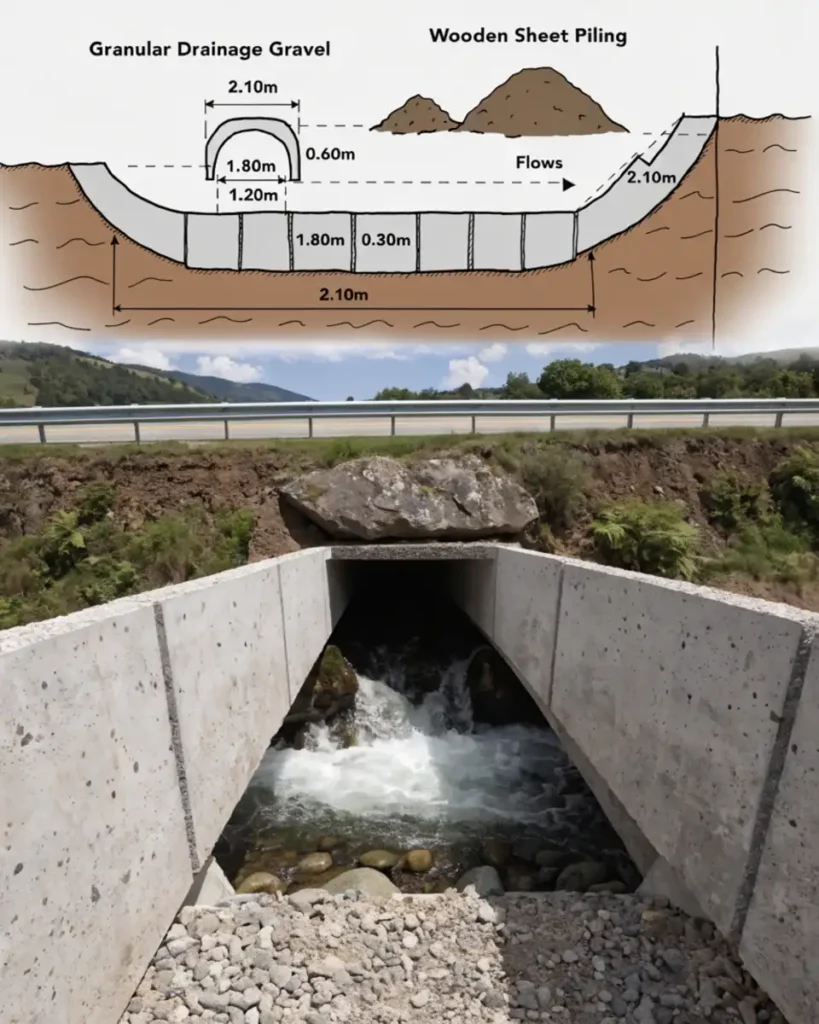
These differ from cast-in-place culverts, which pour concrete on-site. Precast ones offer better quality control and faster setup. In 2026, the market for precast concrete box culverts grows at a 6.4% CAGR due to urban projects and better stormwater needs.
Key Benefits of Precast Concrete Box Culverts
Precast concrete box culverts stand out for their durability and ease. They handle heavy loads with minimal upkeep.
First, they boast high strength from precise factory curing. This meets long-life standards for buried structures. Second, installation is simple, even in deep fills, cutting labor costs.
They also resist corrosion and weathering better than metal options. Plus, flexible designs fit various site needs, like skewed angles or mammal ledges. In stormwater management, they cut flood risks effectively.
Environmental perks include less on-site waste. Tags like precast concrete and precast structures highlight their role in rail fence projects and other concrete products. Overall, these save up to 30% on project timelines.
Design Principles for Box Culverts
Good design starts with site surveys and load calculations. Engineers consider soil type, water flow, and traffic loads.
Standard sizes range from 1m x 1m to 6m x 6m, with wall thicknesses of 150-300mm. Single-cell or multi-cell options allow customization. Use software like BIM for 2026 precast planning.
Key factors include hydraulic capacity and seismic resistance. Openings match stream flows to avoid erosion. Precast units often feature tongue-and-groove joints for watertight seals.
In 2026 updates, lightweight mixes and automated casting boost efficiency. Always follow codes like AASHTO or Eurocode for safety.
Design Comparison Table
| Feature | Precast Box Culvert | Cast-in-Place Culvert |
| Production Time | Factory, 1-2 weeks | On-site, 4-6 weeks |
| Quality Control | High (controlled) | Variable (weather) |
| Cost per Unit | Higher initial | Lower material |
| Durability | 100+ years | 50-80 years |
| Flexibility | Standard sizes | Fully custom |
This table shows why precast wins for speed and strength.
Materials and Manufacturing Process
High-grade concrete, often C40 or higher, forms the backbone. Reinforce with steel rebar or fibers for tensile strength.
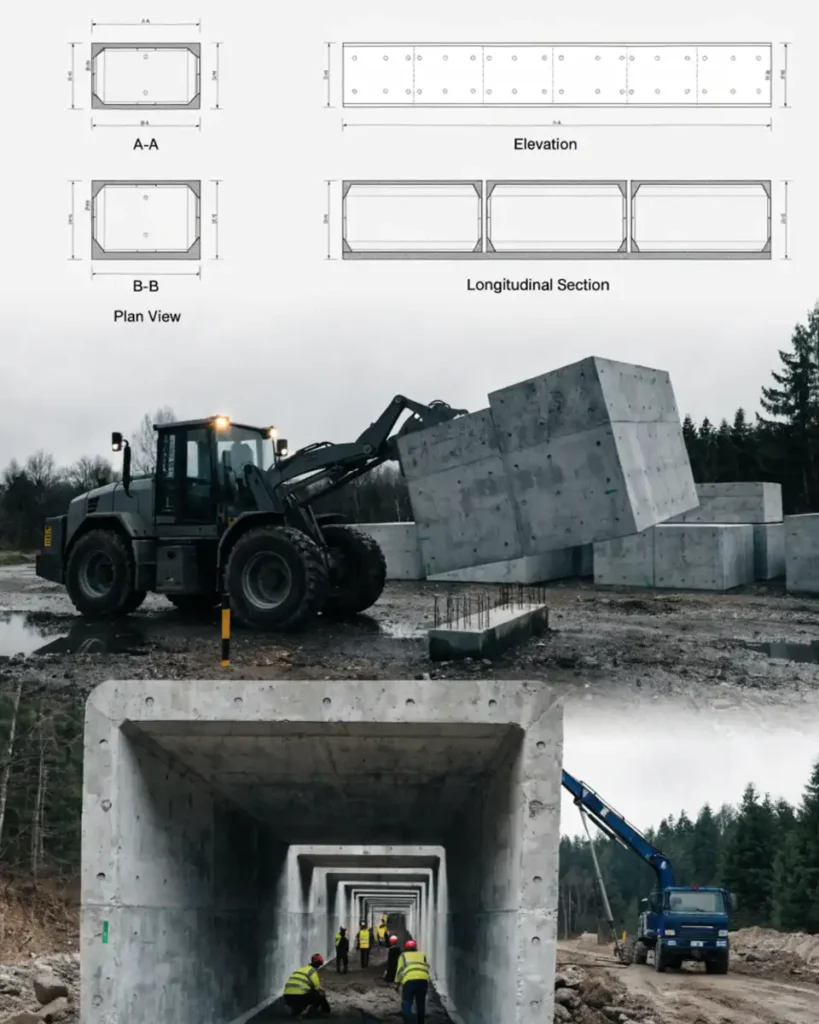
Factories mold units in steel forms, vibrate to remove air, then steam-cure for 24 hours. This ensures uniform strength. Additives like fly ash make them eco-friendly.
In 2026, trends include recycled aggregates and self-healing concrete. Quality checks test compressive strength at 50MPa minimum. Units get protective coatings for harsh soils.
Precast structures arrive ready-to-lift with embedded anchors. This cuts site prep.
Step-by-Step Installation Guide
Installation needs planning but goes fast with precast. Follow these steps for success.
Site Preparation
Clear the trench to exact dimensions. Compact the base and add gravel bedding for stability. Ensure slopes match design hydraulics.
Delivery and Unloading
Trucks deliver units sequentially. Use cranes with min 50-ton capacity. Inspect for cracks before placement.
Placement and Jointing
Lower the first base slab. Align sidewalls, then top slab. Seal joints with rubber gaskets or mortar. Backfill in layers, compacting each.
Final Checks
Test for leaks under water pressure. Restore pavement or rail fence above. Total time: 1-2 days per unit.
Pro tip: In Gujarat projects, like Ahmedabad tenders, precast box culverts speed up monsoon drains.
Applications in Modern Infrastructure
Box culverts shine in roads, railways, and urban drainage. They carry stormwater under highways, preventing washouts.
In rail fence zones, they protect tracks from floods. Wastewater and utility tunnels use them too. Transportation takes over 40% market share.
2026 sees growth in sustainable cities, with box culverts in green infrastructure. They pair with precast concrete products for full systems.
Maintenance and Longevity
These structures need little care. Inspect yearly for cracks or sediment buildup.
Clean debris with high-pressure water. Repair joints if needed. With proper design, they last 100 years.
In harsh climates, apply sealants. 2026 innovations like durable coatings extend life further.
Latest 2026 Updates and Trends
The precast concrete box culvert market surges with urbanization. Government tenders in India, like Gujarat’s RCC box culvert projects, boost demand.
New tech includes BIM-integrated design and automated production. Lightweight units ease transport. Stormwater focus grows at 8% yearly due to climate shifts.
Multi-unit systems offer flexibility for long spans. Sustainability drives recycled materials use.
Cost Analysis
Precast costs $500-2000 per meter, depending on size. Factor in transport and crane rental.
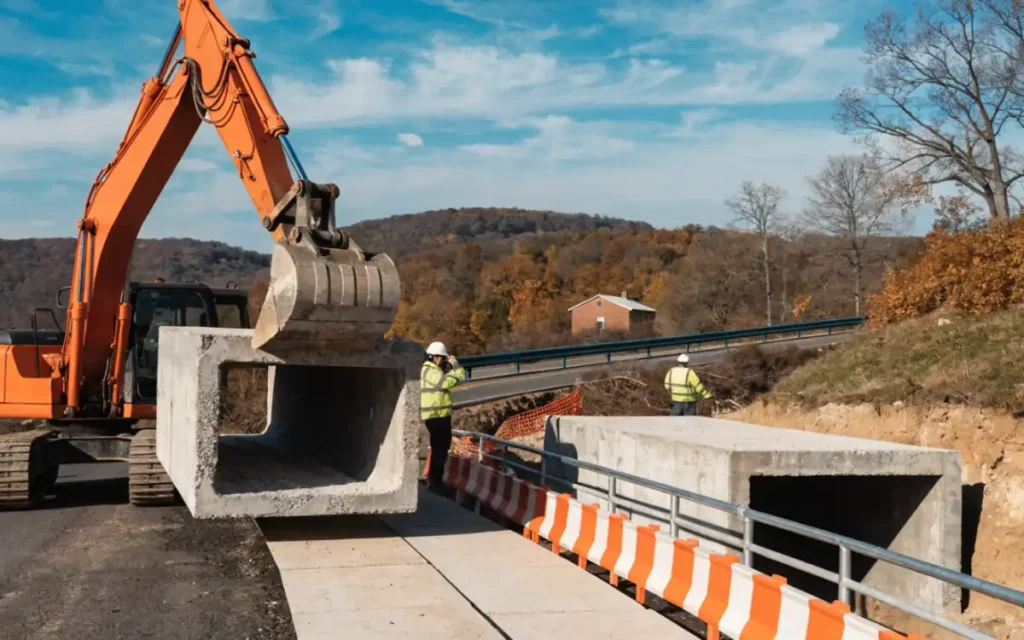
Savings come from quick installs, slashing labor by 50%. Compare to cast-in-place: precast wins on large projects.
| Cost Factor | Precast Estimate | Savings vs. Cast |
| Material | 40% total | 10% less waste |
| Labor/Install | 20% total | 50% faster |
| Lifecycle | Low maintenance | 20-year payback |
Challenges and Solutions
Tight sites challenge crane access. Solution: use excavator-lifted units.
Hydraulic mismatches cause backups. Design with flow software.
In 2026, skilled labor shortages push modular precast adoption.
Conclusion
Precast concrete box culverts deliver reliable, fast infrastructure solutions. From design to install, they cut risks and costs.
With 2026 growth in precast, now’s the time to spec them. Choose precast for your next project you won’t regret it.
For Repair and Services
1924 W Edward Ln, Milwaukee, WI 53209, United States
Phone: +14142855933
Email: [email protected]
Leave a Reply