Why Is Septic Tank Pumping Essential for Your Home?
A septic system is essentially a private sewage treatment plant. It uses a combination of nature and technology to treat wastewater from your bathrooms, kitchen, and laundry. Over time, solids settle at the bottom of the tank, forming a layer known as “sludge.”
If you neglect septic tank pumping, that sludge layer continues to grow until there is no room left for liquid to settle. When this happens, solid waste can escape into the drainfield, clogging pipes and causing sewage to back up into your home or bubble up in your yard. Regular maintenance prevents:
- Costly Repairs: Replacing a failed drainfield can cost upwards of $10,000.
- Environmental Hazards: Leaking waste can contaminate local groundwater.
- Property Value Loss: A failing septic system is a major red flag for potential buyers.
Inside the Modern Concrete Plant
5 Signs You Need Professional Septic Tank Pumping Immediately
You shouldn’t always wait for a scheduled appointment if your system is crying for help. Keep an eye (and nose) out for these red flags:
1. Slow Drains and Gurgling Pipes
If your sinks, tubs, and toilets are sluggish despite using a plunger, the issue might not be a simple clog. Gurgling sounds coming from the pipes often indicate that the tank is full and air bubbles are being forced back through the system.
2. Foul Odors Around the Yard
A healthy septic system shouldn’t smell. If you catch a whiff of rotten eggs or raw sewage near the tank or the drainfield, it’s a sign that gases are escaping because the tank is over capacity.
3. Lush, Greener Grass Over the Drainfield
While we all want a green lawn, an unnaturally vibrant, spongy patch of grass over your septic area is a bad sign. It usually means liquid waste is surfacing and over-fertilizing the grass because the tank can no longer contain it.
4. Standing Water
Pooling water in the yard during dry weather is a “code red” situation. It indicates that the soil is saturated and can no longer absorb wastewater, requiring immediate septic tank pumping.
5. Sewage Backups
This is the final stage of neglect. If dark, foul-smelling liquid is backing up into your lowest drains, call a professional immediately.
Australia Construction Industry News Today
How Often Should You Schedule a Pump-Out?
A common question homeowners ask is: “How long can I go between cleanings?” While the general rule of thumb is every 3 to 5 years, several factors can change that timeline:
- Household Size: A family of six will fill a tank much faster than a couple living alone.
- Tank Capacity: Smaller tanks require more frequent attention.
- Water Usage: High water volume (constant laundry, long showers) pushes waste through the system faster, giving solids less time to settle.
- Garbage Disposal Use: Using a disposal increases the solid waste in your tank by up to 50%, significantly shortening the time between pumping sessions.
New Construction Homes Sale Near Me
The Septic Tank Pumping Process: What to Expect
When the technician arrives for your septic tank pumping appointment, the process is relatively straightforward but requires specialized equipment.
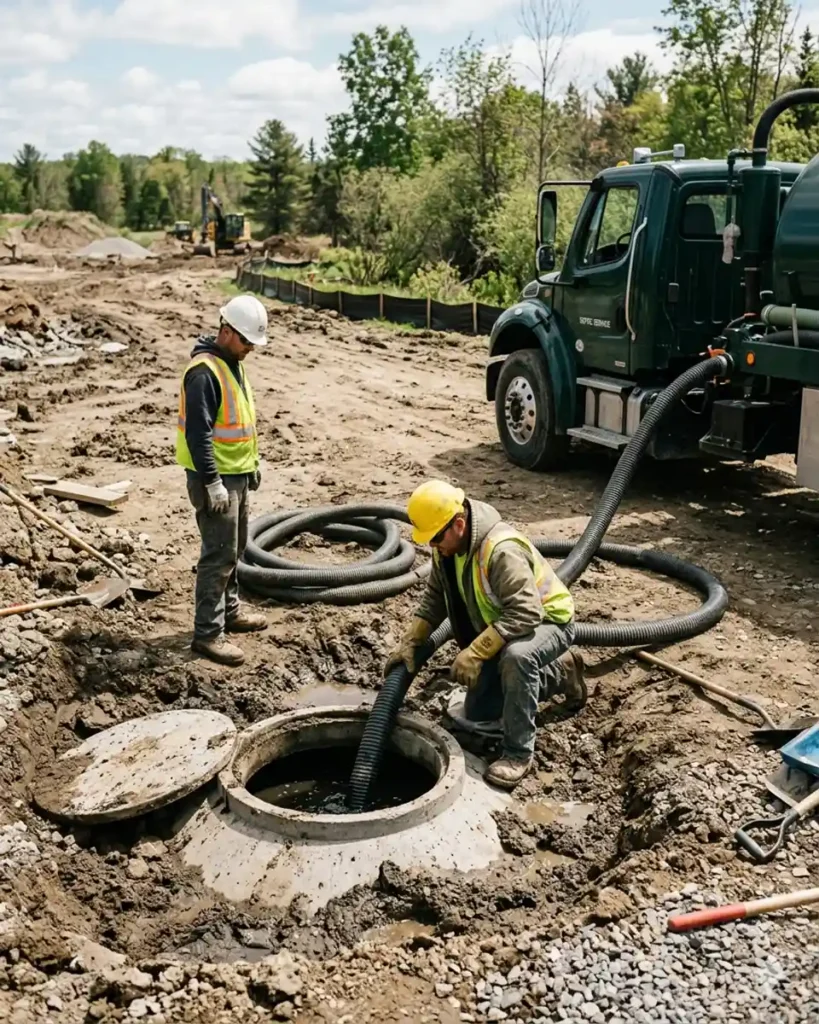
- Locating the Lid: The technician will find the access manhole. If it’s buried, they may need to dig a small hole to reach it.
- Inspection: Before pumping, they check the liquid levels to see if the system is operating normally or if there are signs of a leak.
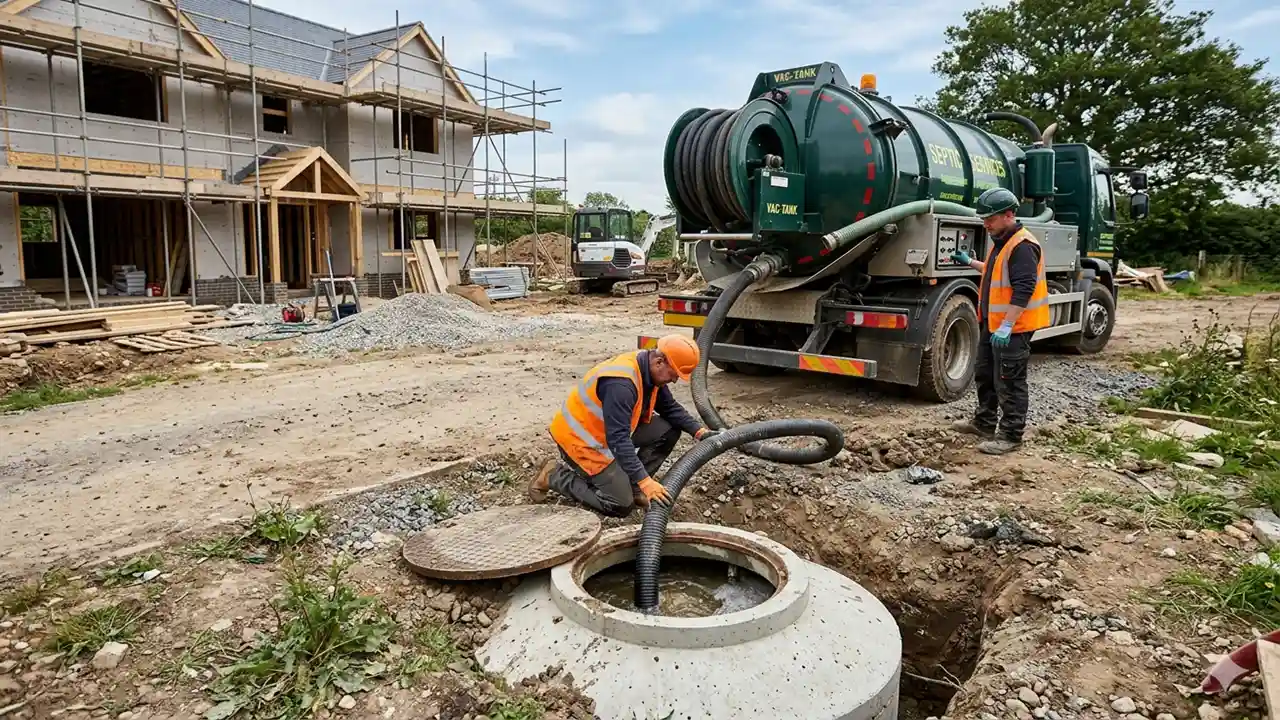
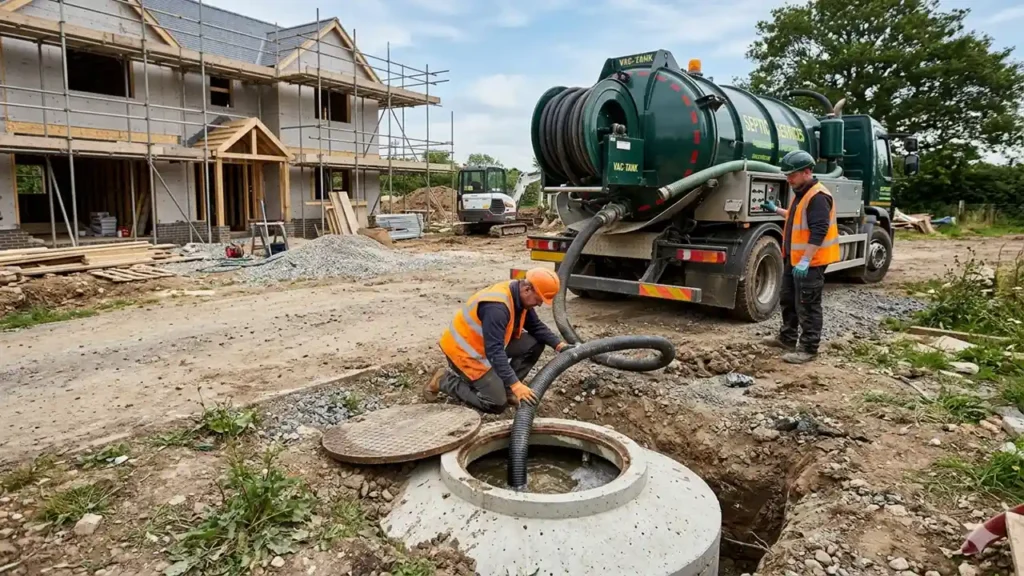
- The Pump-Out: A large vacuum truck uses a high-powered hose to suck out both the liquid and the heavy sludge from the tank.
- Cleaning and Backwashing: The pro will often “backwash” the tank, using high-pressure water to break up the thick sludge at the bottom to ensure the tank is completely empty.
- Final Check: They will inspect the baffles (the T-shaped pipes that direct flow) to ensure they aren’t damaged or clogged.
Proactive Tips to Extend the Life of Your Septic System
Beyond regular septic tank pumping, your daily habits dictate how long your system lasts.
- Watch What You Flush: Only flush human waste and toilet paper. Avoid “flushable” wipes, feminine products, paper towels, and cigarette butts.
- Avoid Harsh Chemicals: Excessive use of bleach or drain cleaners kills the “good bacteria” in your tank that helps break down solids.
- Don’t Park on the Drainfield: The weight of vehicles or heavy machinery can crush the pipes and compact the soil, ruining your system’s ability to filter water.
- Spread Out Laundry: Doing five loads of laundry on Saturday can “flood” the system. Try to spread chores throughout the week.
rhreporting.nic.in 2020-21 New List Odisha
FAQ
How much does septic tank pumping cost?
On average, homeowners pay between $300 and $600 for a standard pump-out. This price can vary based on the size of the tank, your location, and how much digging is required to find the lid.
Can I pump my own septic tank?
No. Septic tank pumping requires a vacuum truck and a permit to transport and dispose of biohazardous waste. Additionally, the fumes inside a septic tank are toxic and can be fatal without proper safety gear.
Should I add “activators” or additives to my tank?
Most experts and the EPA agree that additives are unnecessary. A healthy human gut provides all the bacteria a septic system needs to function. Some chemicals can actually harm the soil in your drainfield.
What happens if I never pump my tank?
Eventually, the sludge will reach the outlet pipe and flow into your drainfield. This clogs the soil pores, causing the system to fail entirely. At that point, you aren’t just looking at a pump-out; you’re looking at a multi-thousand dollar replacement.
Protect Your Home and Health
Your septic system is one of the most vital components of your home’s infrastructure. While septic tank pumping might feel like a chore, it is a small investment that prevents massive headaches down the road. By staying on top of a 3-to-5-year schedule and watching for early warning signs, you ensure your home remains safe, clean, and functional.