


What is Electronic Distance Meter Technology?
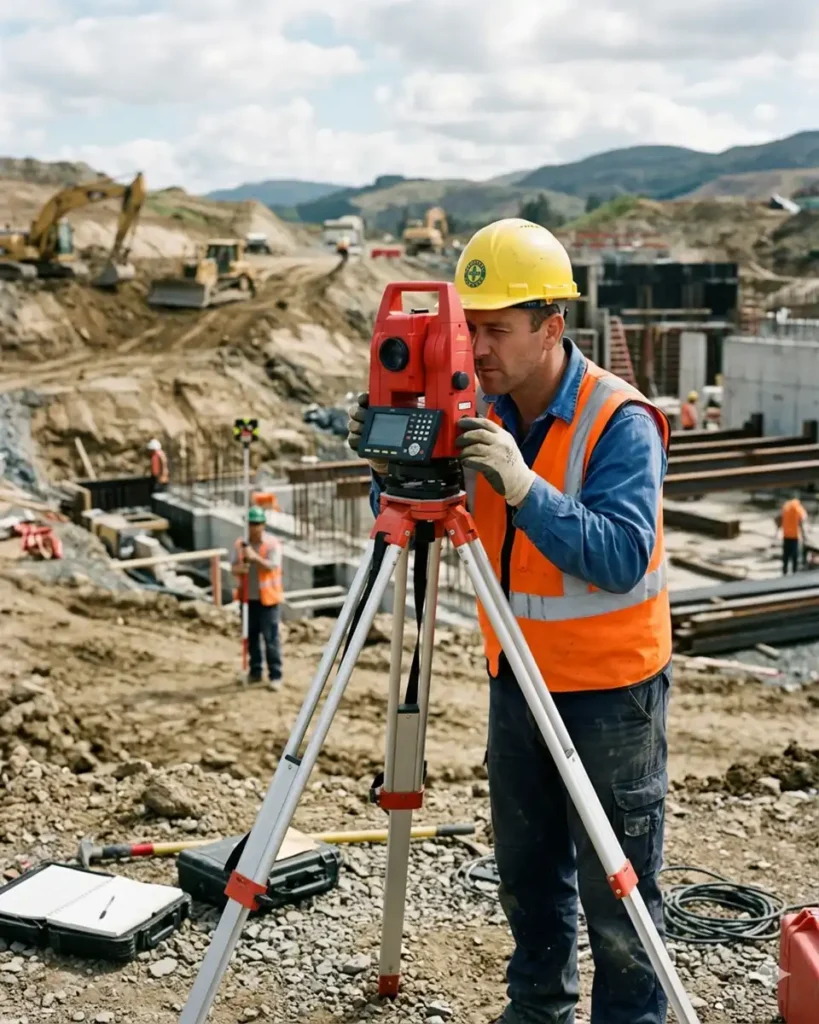
At its simplest, an electronic distance meter (EDM) is an instrument used to measure the distance between two points using electromagnetic waves. Instead of physically stretching a tape across a field, an EDM emits a wave typically infrared, laser, or microwave toward a target. By measuring the time it takes for that wave to reflect back, the device calculates the distance with incredible speed.
In the context of what is electronic distance meter construction utility, these devices are usually integrated into “Total Stations.” They allow surveyors to gather data in seconds that would previously have taken hours of manual labor.
Concrete Resurfacing: The Ultimate Guide to Reviving Your Surfaces
How Does an EDM Work?
Understanding the “how” helps illustrate why these tools are so reliable. An EDM operates on a basic principle of physics: Distance = Velocity × Time.
- Emission: The device sends out a modulated continuous wave.
- Reflection: The wave hits a prism or a reflective surface at the target point.
- Reception: The EDM receives the returning wave.
- Phase Shift Calculation: The internal computer analyzes the “phase shift” or the time delay of the wave to determine the exact length.
Because light travels at a constant speed, the margin of error is incredibly low. When people ask what is electronic distance meter precision like, the answer is often within a few millimeters over several kilometers.
Types of Electronic Distance Meters in Construction
Not all EDMs are created equal. Depending on the environment and the distance required, professionals choose between three primary categories:
1. Infrared Wave Instruments
These are the most common in general building projects. They use infrared pulses and prisms to reflect the signal. They are highly accurate for distances up to 3–5 kilometers.
The Ultimate Guide to Choosing and Using a concrete buggy
2. Light Wave (Laser) Instruments
Laser-based EDMs are versatile. Some “reflectorless” models don’t even need a prism; they can bounce a laser off a wall or a pipe. This is vital for measuring dangerous or unreachable areas.
3. Microwave Instruments
Used for massive infrastructure projects like long-span bridges or dam monitoring. These can measure distances up to 100 kilometers but require a “master” and a “remote” unit at both ends.
Precast Concrete Panels: 7 Smart Benefits Every Builder Should Know
Key Benefits: Why Construction Needs EDM
If you are still wondering what is electronic distance meter value for a small business, consider these three pillars of project management:
- Speed: Measurements that took twenty minutes with a steel tape now take two seconds.
- Reduced Human Error: Manual reading of tapes is prone to mistakes. An EDM provides a digital readout that can be synced directly to CAD software.
- Safety: You can measure the height of a cliff or the width of a busy highway without having to physically stand in a high-risk zone.
In the modern landscape, knowing what is electronic distance meter capability means knowing how to keep a project on budget and on schedule.
Using an EDM on the Job Site: Best Practices
To get the most out of an electronic distance meter, surveyors must account for atmospheric conditions. While the technology is advanced, it isn’t magic.
- Temperature and Pressure: High heat or low pressure can slightly alter the speed of the wave. Modern EDMs allow you to input these variables to “correct” the measurement.
- Clear Line of Sight: Since it uses waves, physical obstructions like heavy fog or thick brush can interfere with the signal.
- Stability: The device must be mounted on a sturdy tripod. Even a slight vibration can throw off a long-distance reading.
When professionals discuss what is electronic distance meter reliability, they are usually referring to a device that has been properly calibrated for the local environment.
The Evolution: From EDM to Total Stations
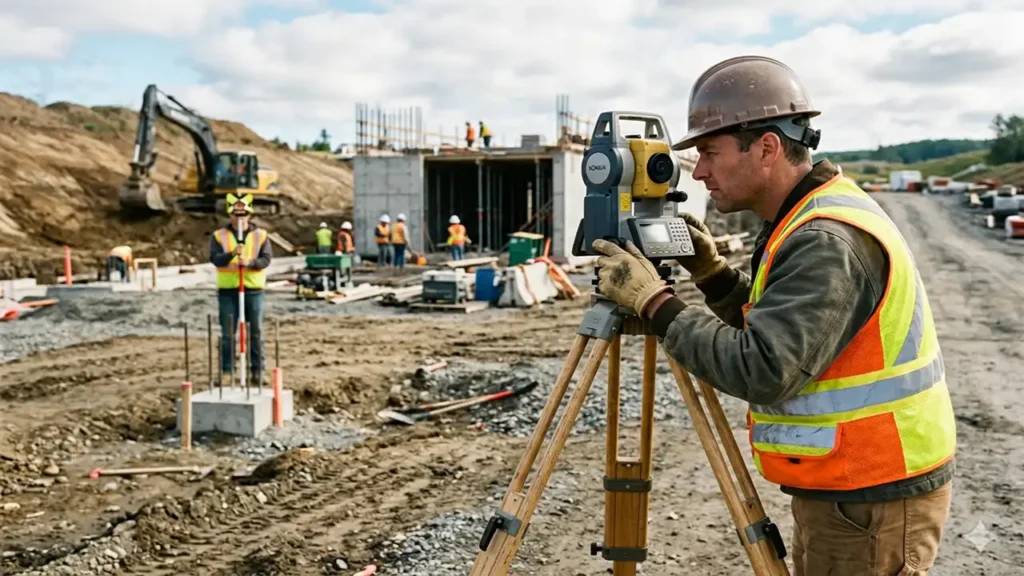
It is hard to talk about what is electronic distance meter history without mentioning the Total Station. In the past, you needed a Theodolite to measure angles and an EDM to measure distance.
Today, these are combined into one robotic unit. This integration has revolutionized what is electronic distance meter construction workflows, allowing a single operator to perform a task that used to require a three-person crew.
FAQ
1. What is electronic distance meter accuracy compared to a tape measure?
An EDM is significantly more accurate over long distances. While a tape might sag or expand in the heat, an EDM maintains a precision of roughly $\pm(2mm + 2ppm)$, making it the gold standard for engineering.
2. Can an EDM measure through walls?
No. Because it relies on light, infrared, or microwaves, it requires a relatively clear path to the target or prism.
3. What is electronic distance meter “Reflectorless” mode?
Reflectorless EDM uses a high-intensity laser that can bounce off any light-colored surface. It is perfect for measuring things like overhead wires or building facades where placing a prism is impossible.
4. Does weather affect the readings?
Yes. Rain, heavy dust, or “shimmer” from extreme heat can scatter the beam. Most high-end units have built-in sensors to compensate for these environmental factors.
Accuracy is the Foundation of Success
In summary, what is electronic distance meter technology? It is the bridge between a blueprint and a physical reality. By using electromagnetic waves to provide instant, pinpoint measurements, the EDM has eliminated the guesswork that once plagued the construction industry.
Whether you are a seasoned surveyor or a project manager looking to upgrade your tech, understanding the power of an electronic distance meter is essential for staying competitive. Precise data leads to fewer mistakes, lower costs, and a safer job site.
Leave a Reply