
Midwest crews are working tighter schedules with heavier loads and more subcontractors on site, and each of those pressures raises the risk of a serious injury.
Knowing what are the common causes of accidents on construction sites tells you where to spend your safety budget and your technology dollars.
It also protects your timeline, your insurance rates, and your crew.
Key Takeaways
- Construction accounted for 19.5% of all U.S. on-the-job fatalities from 2002 to 2012, nearly one in five workplace deaths.
- Falls alone caused 278 deaths in 2012, or 36% of all construction fatalities that year.
- About 4,500 workers are injured in scaffolding accidents every year, and most of those injuries trace back to improper setup.
Post and Beam Construction Cloth Hall Lancashire Religious House: Read the Frame
What Are the Common Causes of Accidents on Construction Sites?
Four hazards cause most construction deaths. OSHA (the U.S. Occupational Safety and Health Administration) calls them the Fatal Four: falls, struck-by incidents, electrocution, and caught-in or caught-between hazards.
Our team reviewed the construction accident breakdown from Michael S. Lamonsoff’s firm, and the pattern is consistent.
The underlying cause is systemic: employers skip the regulations OSHA puts in place to keep workers safe.
Missing training, poor site conditions, and outdated equipment follow from that.
If you’ve been following construction technology trends across the Midwest, this won’t come as a surprise.
Better tools exist for every one of these hazards, but tools only work when your crew uses them every day.
How Do the Fatal Four Hazards Compare?
We built this reference table to answer what are the common causes of accidents on construction sites at a glance.
| Hazard | Key Data | Primary Prevention | Relevant Standard |
|---|---|---|---|
| Falls | 278 deaths in 2012 (36% of total) | Guardrails on stairwells and edges, personal fall arrest systems | OSHA 29 CFR 1926 Subpart M |
| Struck-by | 78 deaths in 2012 | Equipment operator training, high-visibility gear, exclusion zones | OSHA 29 CFR 1926 Subpart CC (cranes) |
| Electrocution | One of the Fatal Four leading causes | Map every energized source, keep clearance from power lines, use GFCIs | OSHA 29 CFR 1926 Subpart K |
| Caught-in/between | One of the Fatal Four leading causes | Shoring and trench boxes, swing-radius barricades | OSHA 29 CFR 1926 Subpart P |
Start with falls. The OSHA fall prevention campaign offers free planning tools you can adapt to your site.
Which Hazards Do Crews Overlook Beyond the Fatal Four?
Secondary hazards injure thousands of workers every year.
Any honest answer to what are the common causes of accidents on construction sites has to include these:
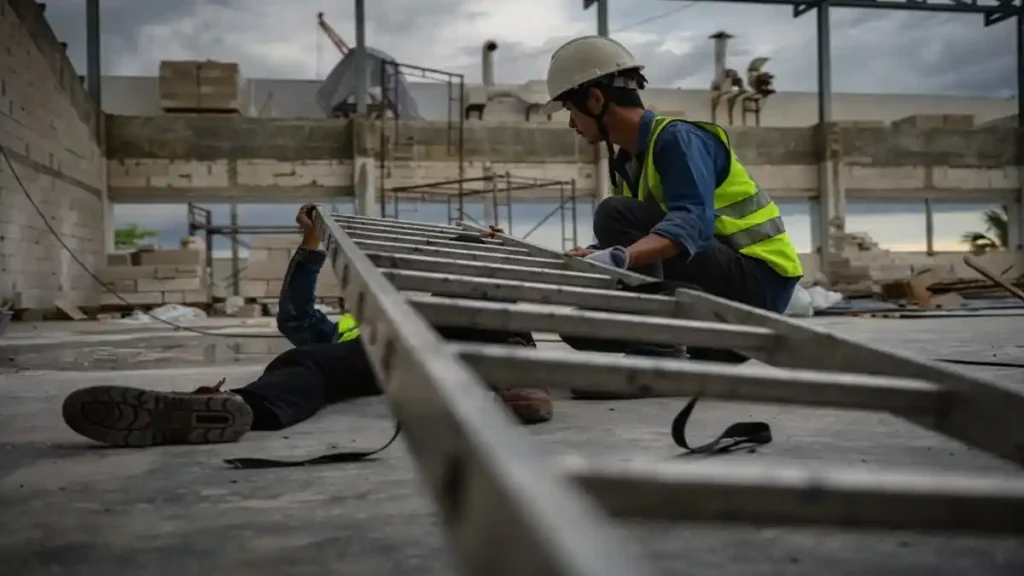
- Ladders: Crews pick the wrong ladder type, use damaged ladders, or set them up badly. Manufacturing defects also cause failures.
- Scaffolding: About 4,500 workers are hurt each year. Only trained personnel should erect, move, change, or take down scaffolds, as the OSHA scaffolding standards require.
- Power tools: Electrical failures, mechanical defects, and insufficient training drive most incidents.
- Construction vehicles: Graders, backhoes, forklifts, and dump trucks create constant strike and rollover risks.
- Fires and explosions: Leaking gas and partially completed electrical systems are common ignition sources.
- Trench collapses: An unprotected trench can bury a worker alive in seconds.
Our contractors note that fatigue is the most underrated risk on this list.
Tired workers, and workers already dealing with aches and pains, get hurt more often and cause more injuries to others, especially in summer heat.
The NIOSH heat stress resources include work-rest schedules you can post on site this week.
Page County Iowa Megaprojects Construction Expansion Since 2024-02-27: Bid Smarter
What Are The Common Causes Of Accidents On Construction Sites Knowing what are the common causes of accidents on construction sites tells you where to spend… @NAHBhome @Spp_limited @CSISafety https://t.co/aPpBXBTFiy
— US News (@Us_news_ways) October 29, 2026
How Can Construction Technology Cut These Risks?
Technology works best when it targets a specific hazard.
Our analysis suggests it pays off fastest when it addresses what are the common causes of accidents on construction sites directly, rather than general productivity.
- Wearable sensors track heat exposure and fatigue indicators in real time.
- Proximity warning systems on heavy equipment alert operators when a worker enters the swing radius.
- Drones inspect roof edges and high scaffolding without putting anyone at height.
- Digital inspection apps timestamp ladder, scaffold, and trench checks.
- The NIOSH Ladder Safety app walks workers through ladder selection, setup angle, and inspection.
Construction industry insiders are noting the same shift in ENR’s industry coverage: safety tech is moving from pilot projects to standard bid requirements.
Pick one hazard from the table, then test one tool against it this quarter.
What Does This Mean for Midwest Contractors?
A daily inspection routine prevents most incidents. Use this sequence to turn what are the common causes of accidents on construction sites into a checklist your foreman can run before the first lift:
- Walk the perimeter and confirm guardrails at every open edge and stairwell.
- Inspect ladders and scaffolds for damage, level footing, and proper tie-offs.
- Locate all energized sources, including overhead lines and temporary panels.
- Check trenches for shoring, trench boxes, and a clear exit route.
- Set equipment exclusion zones around cranes, forklifts, and backhoes.
- Assess crew condition for fatigue, heat strain, and hydration.
- Log every finding in a digital record before work starts.
Our team observed that crews running a written checklist catch hazards that verbal briefings miss.
Print this list and assign one owner for each step tomorrow morning.
North Carolina Resolution Declaring Emergency Construction Software: Prepare Now
How Will This Impact Your Next Build?
Accidents cost far more than medical bills. Injured workers often find that workers’ compensation doesn’t fully cover their losses, which opens the door to third-party claims against subcontractors, property owners, and equipment manufacturers.
Property owners carry real exposure here.
The U.S. Department of Labor enforces more than 180 federal laws on workplace safety, and state and local rules add more.
We found that the best-protected projects treat what are the common causes of accidents on construction sites as a planning question, not a post-incident one.
Build hazard controls into your bid, your schedule, and your subcontractor agreements. Write fall protection, trench safety, and heat plans into the scope from day one.
Safety belongs to everyone on site. It starts with proper training, the right equipment, and a well-maintained work area.
Knowing what are the common causes of accidents on construction sites is step one.
Step two is your next pre-construction meeting: bring the Fatal Four table and assign a prevention owner for each hazard.