


Stamped concrete patterns have revolutionized the way we approach landscaping and home improvement. By mimicking the look of expensive natural materials like stone, brick, and even timber, stamped concrete offers a high-end aesthetic without the eye-watering price tag. Whether you are looking to revamp a tired walkway or install a brand-new pool deck, choosing the right design is the first step toward a total home transformation.
In this guide, we’ll explore the most popular patterns, the benefits of choosing concrete over natural stone, and how to select the perfect style for your property.
Why Choose Stamped Concrete Patterns for Your Home?
Before diving into the specific designs, it’s important to understand why stamped concrete patterns are a top choice for modern homeowners. Unlike individual pavers or natural stones, stamped concrete is a solid, continuous surface. This means you won’t have to worry about weeds growing through cracks or stones shifting over time, creating a tripping hazard.
Beyond the low maintenance, concrete is incredibly durable. When properly sealed, it can withstand harsh weather conditions, heavy foot traffic, and UV exposure for decades. Plus, the customization options are virtually limitless. You can mix and match colors and textures to create a look that is entirely unique to your home.
Popular Stamped Concrete Patterns for Patios and Walkways
Selecting the right pattern depends heavily on the architectural style of your home. Here are some of the most sought-after designs currently trending in the construction industry:
Precast Concrete Finishes: 5 Transform Modern Architecture
1. Ashlar Slate
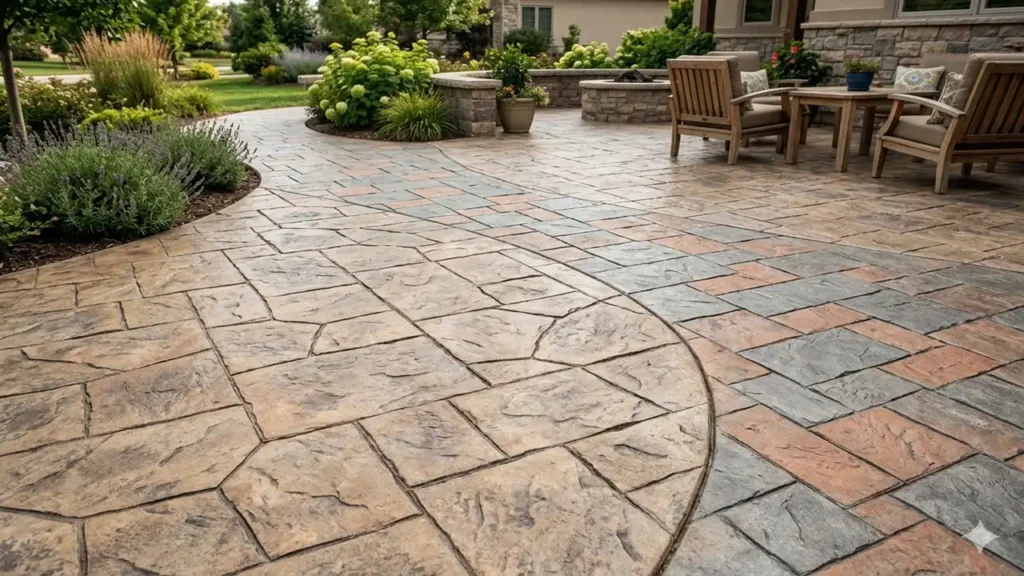
Ashlar Slate is perhaps the most classic choice among stamped concrete patterns. It features a mix of rectangular and square shapes in varying sizes, creating a sophisticated, non-repeating look. It’s perfect for large patios where you want a traditional “cut stone” appearance.
2. Wood Plank (Rustic Boardwalk)
One of the most impressive innovations in decorative concrete is the ability to mimic wood. Wood plank patterns provide the warmth and texture of hardwood or reclaimed timber but with the longevity of stone. This is an excellent option for pool decks where real wood might rot or require constant staining.
3. European Fan
If you want to add a touch of old-world elegance, the European Fan (or Cobblestone Fan) is the way to go. This pattern consists of small, rounded stones arranged in arched rows. It is a popular choice for driveways and grand entryways.
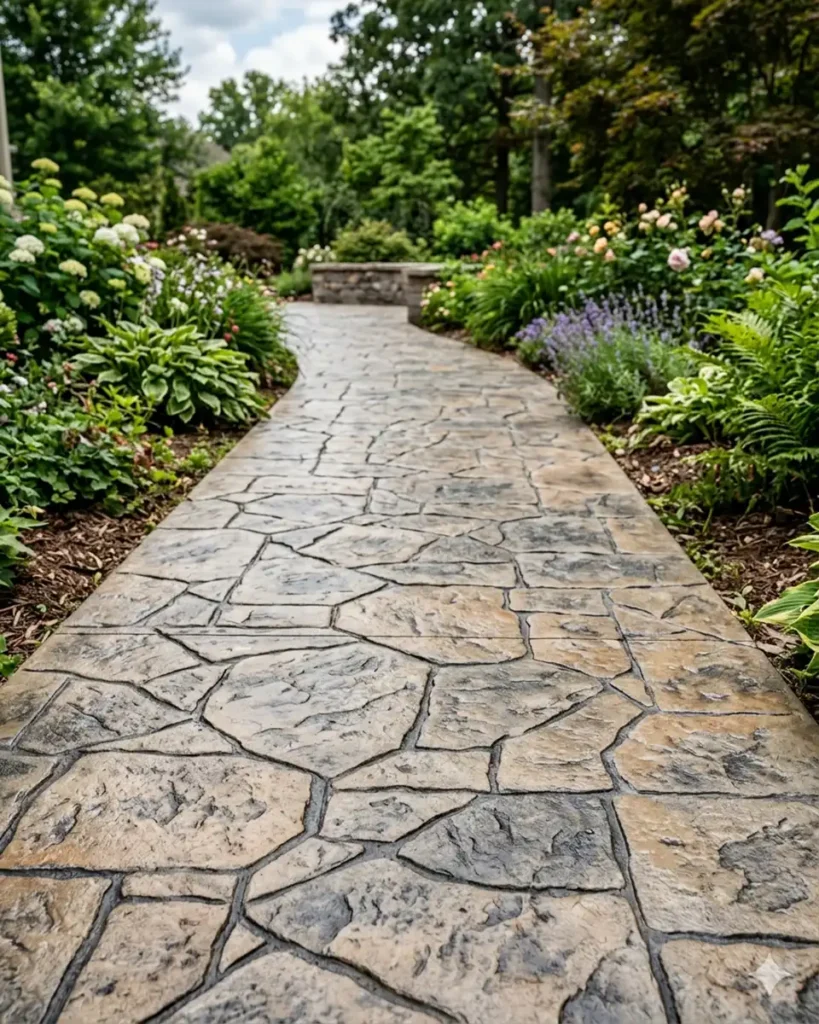
4. Random Stone or Flagstone
For a more organic, “nature-made” feel, flagstone stamped concrete patterns offer irregular shapes and heavy textures. This design blends seamlessly into garden landscapes and looks stunning when paired with earthy, multi-tonal stains
Choosing the Right Color and Texture
A pattern is only half of the equation; the color is what brings it to life. To make stamped concrete patterns look realistic, contractors often use two types of coloring:
- Integral Color: The pigment is mixed directly into the concrete before it’s poured, ensuring the color goes all the way through.
- Release Agents: This is a secondary powder or liquid color applied during the stamping process. It highlights the “nooks and crannies” of the texture, providing a realistic, weathered look.
For example, if you choose a slate pattern, using a charcoal release agent over a light gray base will accentuate the deep ridges, making the concrete nearly indistinguishable from real stone.
Maintenance: Keeping Your Patterns Looking New
One of the reasons homeowners love stamped concrete patterns is the minimal upkeep. However, “low maintenance” doesn’t mean “no maintenance.” To keep your surface looking vibrant:
- Sweep and Wash: Regularly remove dirt and debris to prevent staining.
- Reseal Every 2–3 Years: A high-quality sealer protects the color from fading and prevents water from penetrating the surface.
- Avoid Harsh Chemicals: In the winter, try to avoid using de-icing salts, which can eat away at the sealer and the concrete surface.
Cost Comparison: Concrete vs. Natural Materials
When considering stamped concrete patterns, budget is usually a major factor. On average, stamped concrete costs between $12 and $20 per square foot. In contrast, natural flagstone or slate pavers can cost anywhere from $25 to $50 per square foot once labor and specialized bedding materials are factored in. Because concrete is poured and stamped in large sections, the labor time is significantly reduced, passing those savings on to you.
Benefits of Using RCP Pipe in Precast Concrete Construction
FAQ
Does stamped concrete crack?
Like all concrete, it can develop hairline cracks over time. However, professional installers use “control joints” hidden within the stamped concrete patterns to encourage the concrete to crack in a straight line out of sight, maintaining the beauty of the design.
Is stamped concrete slippery?
It can be when wet, especially with a high-gloss sealer. However, contractors can add a “non-slip” additive (essentially a clear grit) to the final sealer coat to provide extra traction for pool decks and walkways.
How long does the installation process take?
Most residential projects take 3 to 5 days, depending on the size of the area and the complexity of the stamped concrete patterns chosen. This includes site prep, pouring, stamping, and sealing.
Transform Your Property Today
Choosing between various stamped concrete patterns is the best way to add instant value and character to your home. Whether you prefer the sleek look of modern slate or the rugged charm of a wood-textured patio, there is a design that fits your vision and your budget.
Leave a Reply