



What Exactly is Rebaring in Concrete?
At its simplest, rebaring in concrete is the process of embedding steel bars (short for “reinforcing bars”) into concrete forms before the pour. Think of it like the skeleton of the human body. Without bones, we’d be a pile of mush; without rebar, concrete would eventually succumb to “tensile” forces stretching and pulling that causes cracks and collapses.
Concrete is world-class in compressive strength (withstanding weight), but it lacks tensile strength. Steel and concrete are a match made in heaven because they expand and contract at nearly the same rate when the temperature changes, preventing the internal stress that would destroy other material combinations.
Why Is Reinforcement Necessary for Your Project?
You might wonder if a small patio or a driveway really needs the extra cost of steel. While some low-load slabs can get away without it, rebaring in concrete provides several non-negotiable benefits:
- Crack Control: All concrete cracks eventually. Rebar keeps those cracks tight so they don’t widen and create trip hazards or structural failures.
- Load Distribution: It helps spread the weight of heavy vehicles or furniture across the entire slab rather than one weak point.
- Durability: Steel-reinforced concrete can last decades longer than unreinforced structures, especially in areas with shifting soil or extreme weather.
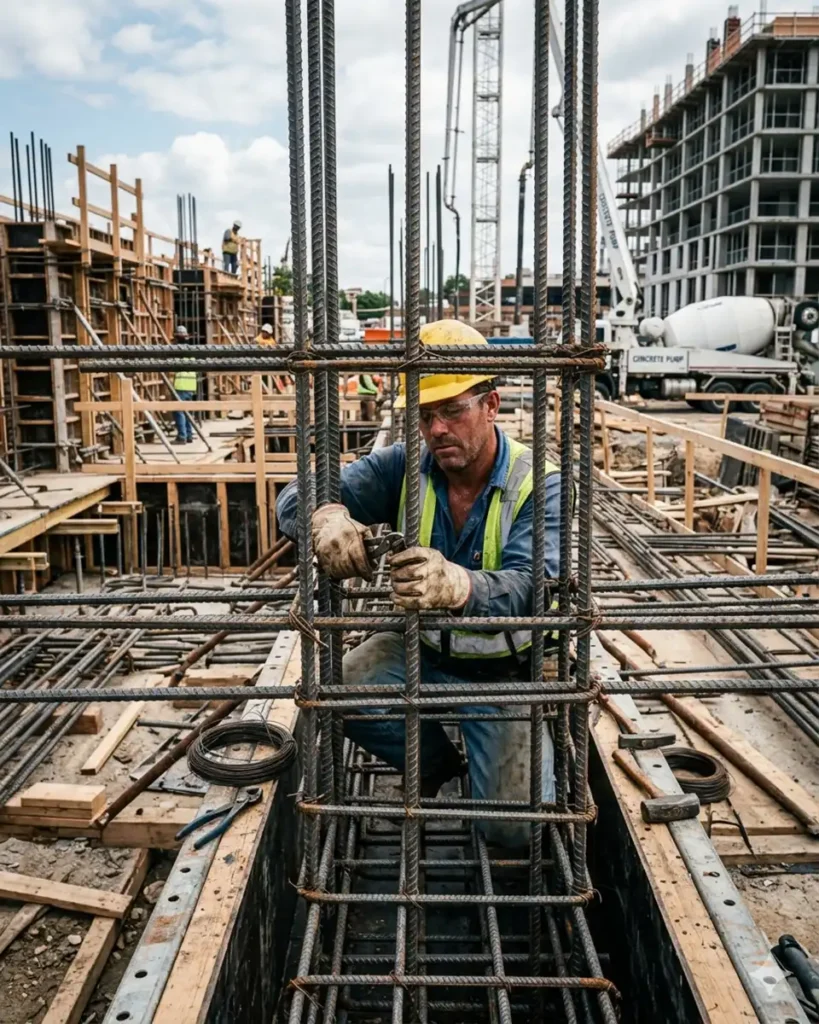
The Step-by-Step Process of Rebaring in Concrete
Proper installation is the difference between a job well done and a costly repair five years down the road. Here is how the pros handle rebaring in concrete:
Pay Application: The Ultimate Guide to Getting Paid in Construction
1. Planning and Sizing
Not all steel is created equal. Rebar comes in different grades and diameters (often measured in eighths of an inch). For most residential projects, #3 or #4 rebar is standard. You’ll need to calculate the spacing usually 12 to 18 inches apart in a grid pattern.
2. Preparation and Cutting
The steel must be free of heavy rust, oil, or mud, as these prevent the concrete from “gripping” the bar. Use a circular saw with a metal-cutting blade or a manual rebar cutter to get your lengths right.
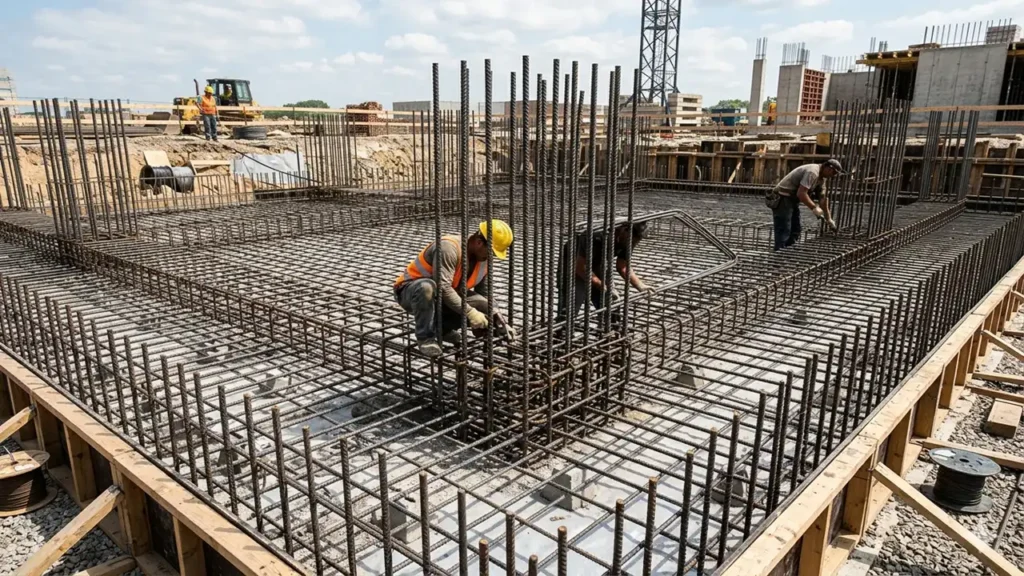
3. Placing the Grid
You should never lay rebar directly on the dirt. It needs to be suspended in the middle of the concrete slab to be effective. Contractors use “chairs” or bolsters—small plastic or metal stands to prop the rebar up.
4. Tying the Connections
Where the bars overlap, they must be secured. Using rebar tie wire and a twister tool, you’ll wrap the intersections to ensure the grid doesn’t shift when the heavy wet concrete is poured over it.
Common Types of Rebar Used Today
When planning for rebaring in concrete, you have a few material options depending on your environment:
- Carbon Steel (Black Bar): The most common and affordable option for most general construction.
- Epoxy-Coated Rebar: Used in high-moisture environments or near saltwater to prevent corrosion.
- Fiberglass (GFRP): A lightweight, rust-proof alternative that is becoming popular for specialized civil engineering.
The Ultimate Guide to Concrete Sealer: Protecting and Enhancing Your Surfaces
Essential Tips for a High-Quality Pour
If you want your rebaring in concrete to be effective, pay attention to the “concrete cover.” This is the distance between the steel and the edge of the concrete. If the steel is too close to the surface, moisture will seep in, rust the metal, and cause the concrete to “spall” or flake off. Generally, you want at least 2 to 3 inches of concrete surrounding the steel on all sides.
Furthermore, always ensure the rebar is bent correctly. Avoid heating the steel to bend it unless it’s a specific grade designed for it, as high heat can weaken the metal’s structural integrity.
FAQ
1. Does every concrete slab need rebar?
Not necessarily. Very small, non-structural slabs like a trash can pad or a small walkway might only need wire mesh or fiber-reinforced concrete. However, for anything supporting weight (like a garage floor), rebaring in concrete is highly recommended.
2. Can I use rusted rebar?
A little bit of surface rust is actually helpful because it creates a rougher texture for the concrete to bond to. However, if the rust is “flaky” or if the bar has lost significant thickness, it should be replaced.
Intermountain Concrete Specialties SLC: Your Ultimate Guide to Professional Concrete Supplies
3. How far apart should rebar be spaced?
Standard spacing for residential driveways or floors is typically an 18-inch on-center grid. For walls or heavy-duty structural elements, this may be reduced to 12 inches or less.
Build to Last
Mastering the art of rebaring in concrete is the single best way to ensure your construction project survives the elements and the test of time. By providing the “pulling strength” that concrete lacks, you create a composite material that is virtually unstoppable.
Leave a Reply