


The Three Phases of New Construction Plumbing
The plumbing process doesn’t happen all at once. It is a synchronized dance with the framing and foundation of the building. Generally, it is broken down into three distinct stages:
1. The Underground Rough-In Phase
Before the concrete slab is poured, plumbers lay the main supply lines and sewer drains. This is the most “permanent” stage; once the concrete is set, moving these pipes becomes an expensive nightmare.
- Drainage Slopes: Ensuring the correct pitch for waste removal.
- Water Main Connection: Hooking the building up to municipal water or a well.
Concrete Mixer for Sale: The Ultimate Buyer’s Guide for Your Next Project
2. The Above-Ground Rough-In (Top-Out)
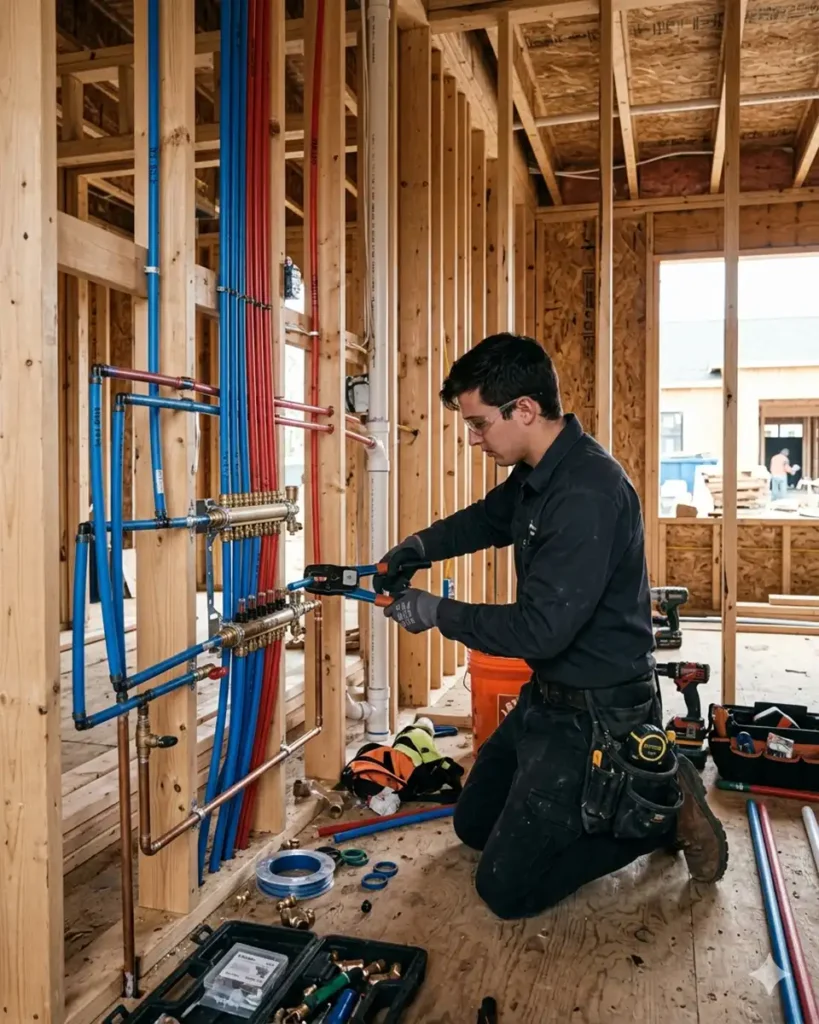
Once the walls are framed but before the drywall goes up, the new construction plumbing continues. Plumbers run supply lines through studs and joists, install vent stacks through the roof, and set “tubs” or shower basins that are too large to fit through finished doorways.
3. The Trim-Out Phase
This is the “pretty” part. After the walls are painted and cabinets are in, the fixtures faucets, toilets, water heaters, and sinks—are installed and tested for leaks.
Choosing the Right Materials for Modern Builds
Materials have evolved significantly over the last few decades. While copper was once the gold standard, modern new construction plumbing often utilizes a mix of materials to balance durability and cost.
- PEX (Cross-linked Polyethylene): Highly flexible, resistant to scale and chlorine, and faster to install than rigid pipe.
- PVC/CPVC: The standard for drain, waste, and vent (DWV) lines because of its longevity and ease of use.
- Copper: Still used for main water entries or in high-end builds where its antimicrobial properties and longevity are prioritized.
Sakrete 60 -lb High Strength Concrete Mix
Essential Considerations for Efficient Drainage
A common pain point in new builds is poor drainage or “gurgling” pipes. Proper new construction plumbing design ensures that the DWV (Drain-Waste-Vent) system is balanced.
Every drain needs a vent to prevent a vacuum from forming, which could pull water out of your P-traps and allow sewer gases into the home. Expert plumbers calculate the “fixture units” to ensure the pipe diameters can handle the peak load of the household, such as when the dishwasher, laundry, and a shower are running simultaneously.
Future-Proofing Your New Construction Plumbing
When you are building from scratch, it is the perfect time to think about the future. Retrofitting is expensive, but adding these features during the initial new construction plumbing phase is relatively affordable:
- Recirculation Pumps: Get instant hot water at every tap without wasting gallons down the drain.
- Water Filtration Systems: Install a whole-home carbon filter or water softener at the point of entry.
- Greywater Ready: If you live in a drought-prone area, consider plumbing your laundry and shower drains separately for garden irrigation.
- Tankless Water Heaters: These save space and provide endless hot water, but they require specific gas line sizes and venting.
Common Challenges in New Construction Plumbing
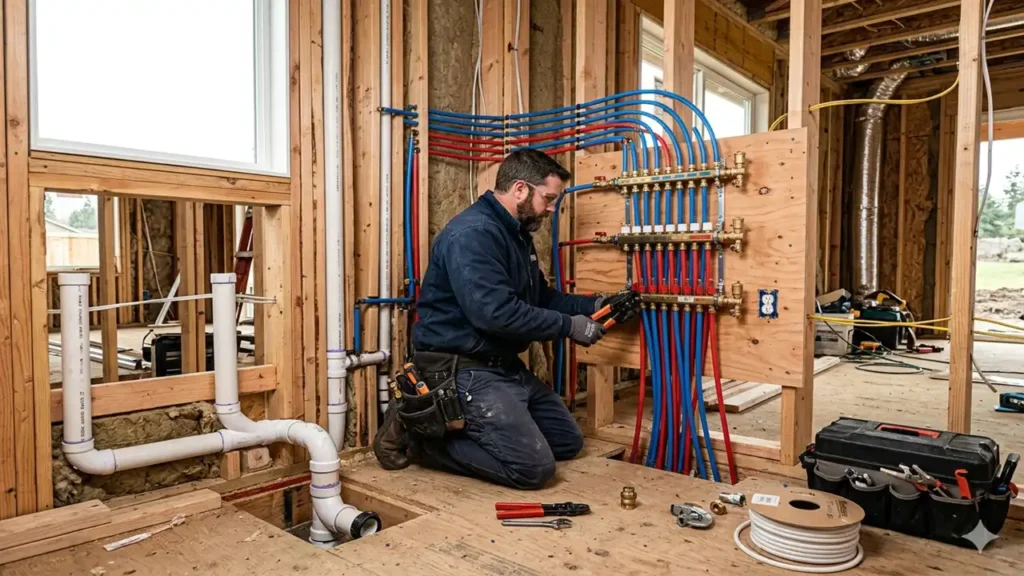
Even with a perfect blueprint, challenges arise. One of the most frequent issues is “trade interference.” This happens when an HVAC duct or a structural beam occupies the same space intended for a large sewer line.
Professional new construction plumbing requires constant communication between the plumber, the general contractor, and the architect. High-quality builders use 3D modeling (BIM) to catch these “clashes” before a single pipe is cut, saving time and preventing structural compromises.
What is Electronic Distance Meter Construction
FAQ
How long does new construction plumbing take?
For an average single-family home, the entire process takes about 2 to 4 weeks of active work, spread out over several months to match the construction schedule.
What is a “stack” in plumbing?
A stack is the vertical section of a drain or vent pipe. The “soil stack” carries waste from toilets, while the “vent stack” allows air into the system to maintain pressure.
Should I choose a tankless or traditional water heater?
During new construction plumbing, tankless is often preferred for its efficiency and space-saving design. However, it does require a higher initial investment and specific venting requirements.
Build on a Solid Foundation
The quality of your new construction plumbing is something you will feel every day from the water pressure in your morning shower to the silence of your drainage system. By focusing on high-quality materials, proper venting, and future-ready features, you ensure your new property remains functional and valuable for decades to come.
Leave a Reply