


On average, a standard concrete slab cost ranges between $6 and $12 per square foot for a professionally installed project. For a typical 400-square-foot garage or patio, you can expect to pay anywhere from $2,400 to $4,800.
However, the “standard” slab is rarely the reality. Costs are heavily influenced by the intended use of the concrete:
- Shed Foundations: Typically 4 inches thick with minimal reinforcement, costing $4 to $8 per sq. ft.
- Driveways & Garages: These require 6-inch thickness and heavy rebar to support vehicle weight, pushing costs to $8 to $15 per sq. ft.
- Decorative Patios: If you opt for stamped patterns or custom stains, the concrete slab cost can climb to $18 to $28 per sq. ft.
Key Factors Influencing Your Concrete Budget
When a contractor provides a quote, they aren’t just looking at the size of the area. Several technical and environmental factors dictate the final price.
1. Slab Thickness and PSI Strength
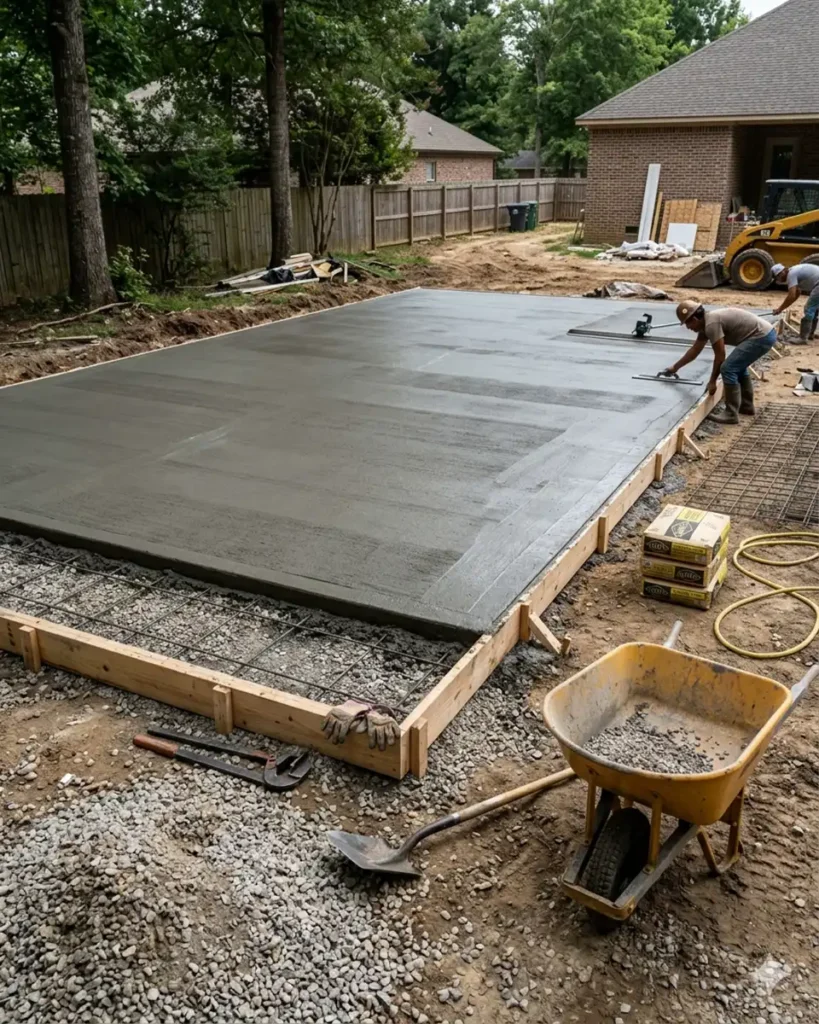
The volume of concrete needed is the primary cost driver. A standard 4-inch slab is sufficient for walkways, but moving to a 6-inch slab—necessary for heavy machinery or large SUVs—increases the material volume by 50%. Additionally, high-strength concrete (measured in PSI) costs more per cubic yard but offers better resistance to freeze-thaw cycles.
2. Reinforcement Materials
Concrete is incredibly strong under compression but weak under tension. To prevent cracking, contractors use:
- Wire Mesh: A budget-friendly option for light-duty slabs.
- Rebar: Steel rods that provide structural integrity for driveways and foundations.
- Fiber Mesh: Synthetic fibers mixed directly into the concrete to reduce shrinkage cracks.
The Ultimate Guide to Choosing and Using a Concrete Drill Bit
3. Site Preparation and Accessibility
If your backyard is on a steep slope or requires significant clearing, your concrete slab cost will rise. Grading (leveling the ground) typically adds $0.50 to $2.00 per square foot. Furthermore, if a concrete truck cannot drive directly to the pour site, you may need to rent a concrete pump, which can cost an additional $500 to $900 per day.
Material vs. Labor: Breaking Down the Bill
Understanding where your money goes can help you decide if you should DIY or hire a pro.
| Category | Estimated Cost (Per Sq. Ft.) | Details |
| Materials | $3.50 – $7.00 | Ready-mix concrete, gravel base, vapor barrier. |
| Labor | $2.50 – $5.00 | Excavation, formwork, pouring, and finishing. |
| Reinforcement | $0.40 – $1.50 | Rebar, mesh, or fiber additives. |
| Subtotal | $6.40 – $13.50 | Total average installed cost. |
Note: These prices reflect 2026 market averages and may vary by region.
Hidden Costs Most Homeowners Overlook
When calculating your concrete slab cost, the “line items” often extend beyond the concrete itself.
- Permits: Depending on your local municipality, a building permit for a permanent structure can cost between $50 and $200.
- Sub-base Gravel: You cannot pour concrete directly onto dirt. A 2-to-4-inch layer of compacted gravel is essential for drainage and to prevent the slab from sinking.
- Edge Thickening: For structural foundations, the edges of the slab are often poured deeper (12 inches or more) to act as a footing, which requires extra material.
- Sealing: To protect your investment from oil stains and water damage, a high-quality sealant adds roughly $1 per square foot but doubles the lifespan of the surface.
DIY vs. Professional Installation
Is it worth doing it yourself to save on the concrete slab cost?
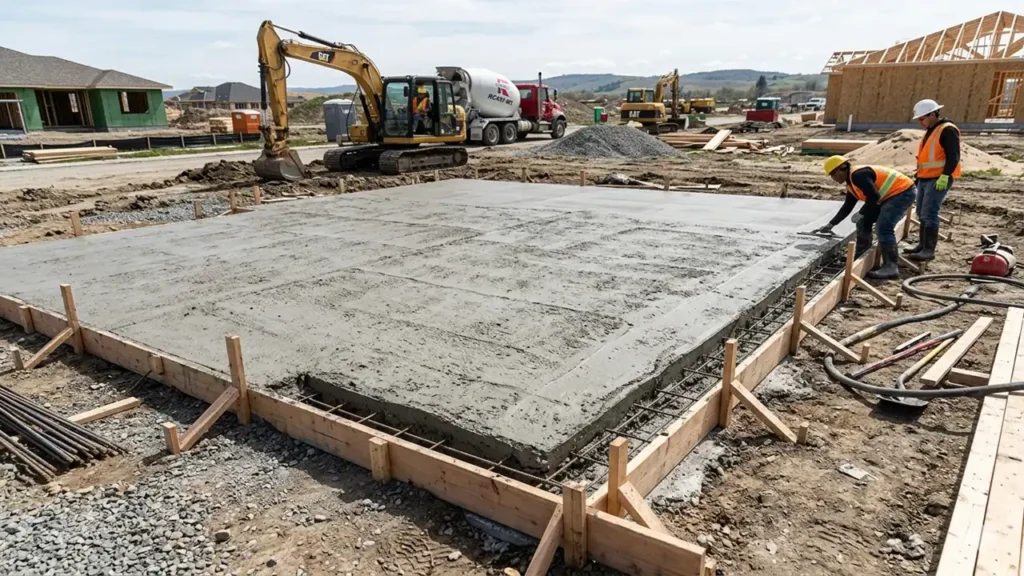
For a small trash can pad or a single-step landing (under 50 sq. ft.), DIY is a great way to save. However, for larger projects, the “window of workability” is incredibly short. Once the concrete is poured, you have a limited time to level and finish it before it sets. If you mess up the pitch (slope), water could drain toward your house foundation, leading to thousands of dollars in water damage—far outweighing the initial savings of DIY labor.
FAQ
How long does a concrete slab last?
A well-installed concrete slab with a proper gravel base and reinforcement can last 30 to 50 years. Regular sealing every 3-5 years significantly extends this lifespan.
Does the time of year affect the concrete slab cost?
Yes. In many regions, pouring in late fall or winter requires “hot water” mixes or chemical accelerants to help the concrete cure in cold temperatures, adding 5% to 10% to the material cost.
Can I pour a new slab over an old one?
Technically, yes (called an overlay), but it’s risky. If the old slab is cracked or settling, those same issues will quickly “reflect” through to the new layer. It is usually better to remove the old concrete to ensure a stable base.
Planning Your Project
The concrete slab cost is an investment in your property’s functionality and value. By accounting for thickness, reinforcement, and site prep early in the planning phase, you can avoid “budget creep” and ensure your project stays on track.
Ready to get started? The best way to lock in an accurate price is to get quotes from at least three local contractors. Be sure to ask for a detailed breakdown that includes the PSI of the mix and the type of reinforcement they plan to use.
Leave a Reply