



Why Using a Concrete Sealer is Non-Negotiable
If you’ve ever noticed your driveway turning a dark, damp color after rain, or seen white powdery scales (efflorescence) on your patio, your concrete is unprotected. Applying a concrete sealer acts as a shield against the elements.
The Benefits of Sealing:
- Moisture Protection: It prevents water from entering pores, which is crucial in cold climates where “freeze-thaw” cycles can cause concrete to expand and crack.
- Stain Resistance: From oil leaks in the garage to wine spills on an outdoor kitchen counter, a sealer provides a window of time to clean up messes before they become permanent.
- UV Resistance: Sun exposure can cause decorative or colored concrete to fade. A good sealer keeps those hues vibrant.
- Longevity: Properly sealed concrete can last twice as long as unsealed surfaces, saving you thousands in repair costs.
Understanding the Different Types of Sealers
Not all sealers are created equal. Depending on whether you want a “wet look” or a completely natural finish, you’ll need to choose between two main categories.
1. Penetrating Sealers
These chemical reactive sealers (silanes, siloxanes, and silicates) penetrate deep into the substrate. They don’t change the look of the concrete but chemically bond with it to create a water-repellent barrier. These are ideal for driveways and sidewalks where you want a natural, non-slip finish.
2. Topical (Film-Forming) Sealers
These sit on top of the surface, creating a protective layer.
- Acrylics: Great for decorative concrete; they provide a high-gloss “wet look.”
- Epoxies: Extremely durable and chemical-resistant, making them the gold standard for garage floors.
- Polyurethanes: Offer a thick, clear coating that is highly resistant to scuffs and scratches.
Step-by-Step: How to Apply a Concrete Sealer Like a Pro
Applying a concrete sealer isn’t overly complicated, but it does require patience and attention to detail.
Step 1: Surface Preparation
You cannot seal over dirt. Use a pressure washer to remove grime, oil, and old coatings. If the concrete is new, wait at least 28 days for it to fully cure before sealing.
Step 2: Repair and Patch
Fill any existing cracks with a high-quality filler. If the sealer is applied over cracks, it won’t bridge the gap it will just highlight the flaw.
Step 3: Application
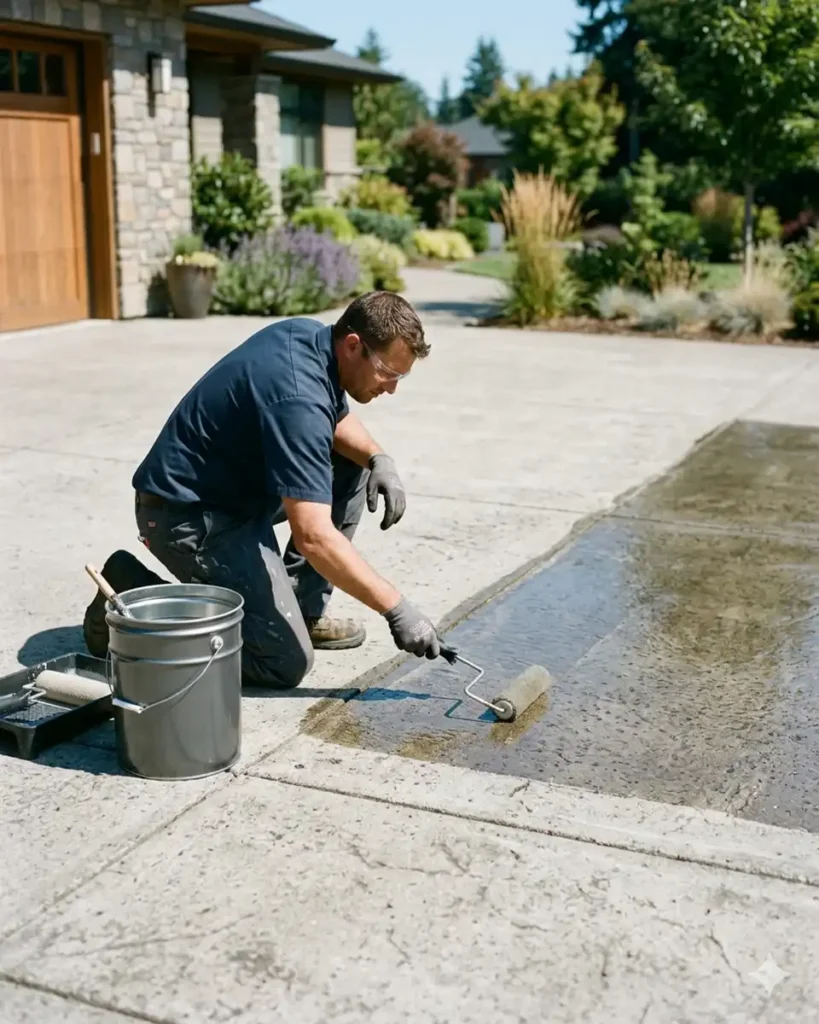
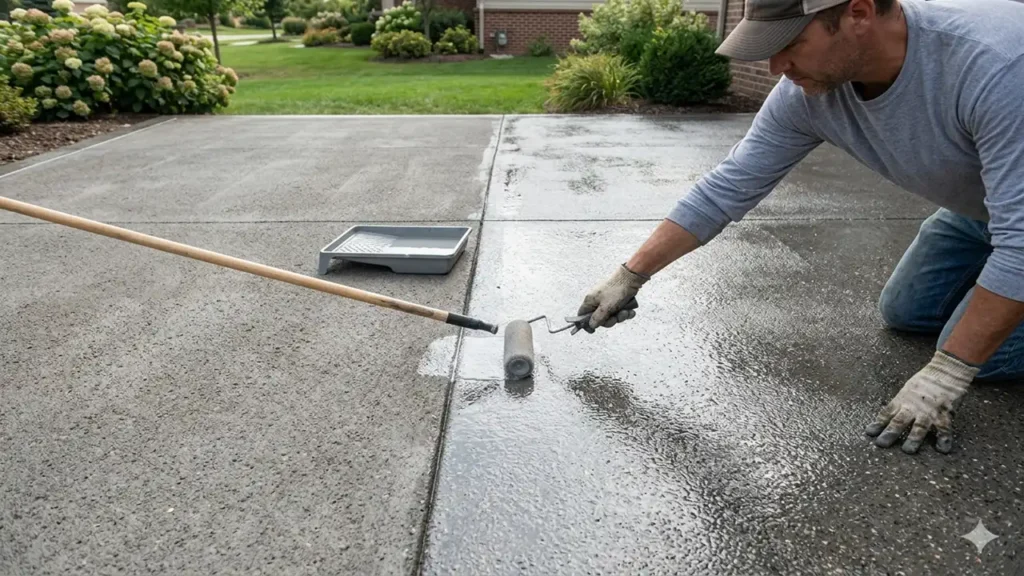
For large areas like driveways, a high-volume, low-pressure (HVLP) sprayer is best. For smaller areas or indoor floors, a lint-free roller works well. Always apply two thin coats rather than one thick one to avoid “puddling” or bubbles.
Step 4: Drying Time
While most sealers are dry to the touch in 2–4 hours, wait at least 24 hours before walking on it and 48–72 hours before driving a vehicle over the surface.
Concrete Concrete Slabs Guide: Advantages of Precast Concrete Solutions
Maintenance: Keeping Your Sealed Surface Pristine
A concrete sealer isn’t a permanent “once and done” solution. Depending on the traffic and weather exposure, you should plan to re-seal your surfaces every 3 to 5 years.
To extend the life of your sealer:
- Sweep regularly: Grit and sand act like sandpaper underfoot, wearing down the protective film.
- Gentle Cleaning: Avoid harsh acids or bleach. A simple solution of water and mild dish soap is usually enough to keep the surface gleaming.
- Winter Care: Avoid using rock salt on sealed surfaces. Instead, use sand for traction, as salt can chemically degrade even the toughest coatings.
Common Mistakes to Avoid During Sealing
Even the best concrete sealer can fail if applied incorrectly. Here are the most frequent pitfalls:
- Applying on Wet Concrete: Moisture trapped under the sealer will cause it to turn white or peel.
- Working in Direct Sunlight: If the concrete is too hot, the sealer will dry too fast, preventing it from bonding correctly.
- Ignoring the Weather: Check the forecast! You need at least 24 hours of dry weather after application for the chemicals to set.
Intermountain Concrete Specialties SLC
FAQ
How do I know if my concrete is already sealed?
The “water test” is the easiest way. Pour a cup of water onto different areas of the concrete. If the water beads up, it’s sealed. If it soaks in and turns the concrete a darker color, it’s time to apply a concrete sealer.
Can I seal old concrete?
Absolutely. As long as the concrete is structurally sound and thoroughly cleaned, old concrete can be sealed to prevent further aging and deterioration.
Will a sealer make my driveway slippery?
Topical sealers, especially high-gloss ones, can become slippery when wet. However, you can easily remedy this by adding a “slip-resistant additive” (a fine transparent grit) into the concrete sealer during the final coat.
Protecting Your Investment Starts Today
Your home is likely your largest investment, and the concrete surrounding it is a huge part of its curb appeal and structural integrity. Using a high-quality concrete sealer is a small upfront cost that prevents massive repair bills down the road.
Leave a Reply