


What Exactly is Concrete Resurfacing?
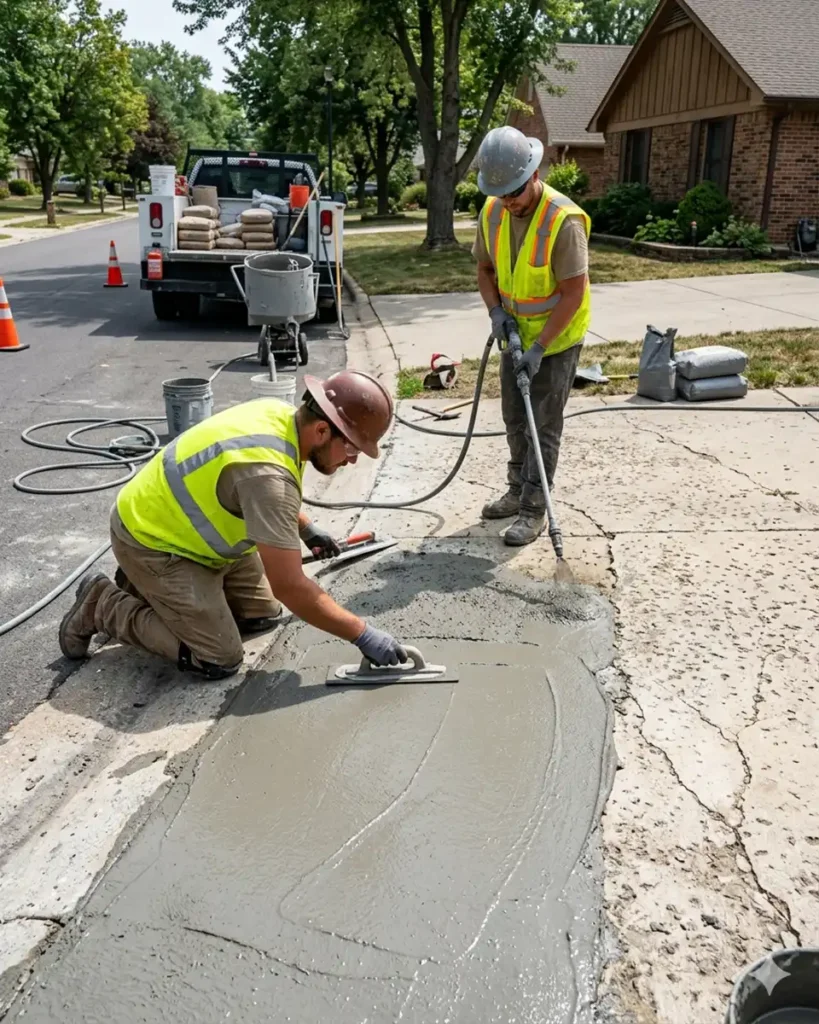
Many homeowners assume that once concrete begins to flake or discolor, the only option is to rip it out and start over. However, concrete resurfacing is a restoration technique that involves applying a thin, polymer-modified overlay directly on top of your existing slab.
Think of it like “refacing” kitchen cabinets rather than replacing the entire unit. This coating bonds to the old surface, creating a fresh, durable canvas that can be stained, stamped, or textured to look like natural stone, brick, or even wood.
The Benefits of Choosing Resurfacing Over Replacement
If your concrete is structurally sound but looks “tired,” resurfacing is almost always the superior choice. Here is why:
1. Significant Cost Savings
Demolition is expensive. When you choose concrete resurfacing, you skip the costs of hauling away old debris and the massive labor fees associated with a full pour. Generally, resurfacing costs about 30% to 50% less than a total replacement.
2. Speed of Installation
A full concrete replacement can turn your home into a construction zone for over a week. Resurfacing projects are often completed in just two to three days, meaning you can get back to using your driveway or patio much faster.
3. Enhanced Aesthetics
You aren’t just getting “new gray.” Modern overlays allow for incredible customization. You can choose from:
- Stamped patterns: Mimic slate, flagstone, or cobblestone.
- Decorative stains: Add deep, variegated colors that won’t fade.
- Anti-slip textures: Essential for pool decks and walkways.
Average Concrete Slab Cost in 2026
Is Your Surface a Good Candidate?
Not every slab is a candidate for concrete resurfacing. To ensure a long-lasting finish, the “bones” of your concrete must be healthy.
- The “Go” Signal: Your concrete has surface-level cracks (hairline), some minor scaling or “spalling,” or general discoloration/stains.
- The “Stop” Signal: If your concrete is sinking, heaving due to tree roots, or has massive structural cracks that go all the way through the slab, you likely have a subgrade issue. In these cases, a new pour is necessary to ensure safety and stability.
Pro Tip: If a crack is wider than a quarter, it may indicate a structural shift that an overlay cannot fix permanently.
The Step-by-Step Process of Professional Resurfacing
Achieving a flawless finish requires more than just pouring a bucket of mix. A professional concrete resurfacing job follows a strict protocol:
- Cleaning: The surface is power-washed or “profiled” using a grinder to remove oil, dirt, and loose debris. This ensures the new layer sticks.
- Repair: Any existing cracks are filled with a specialized epoxy or filler. If these aren’t treated, they will eventually “reflect” through the new surface.
- Priming: A bonding agent is applied to ensure the old concrete and new overlay become one single unit.
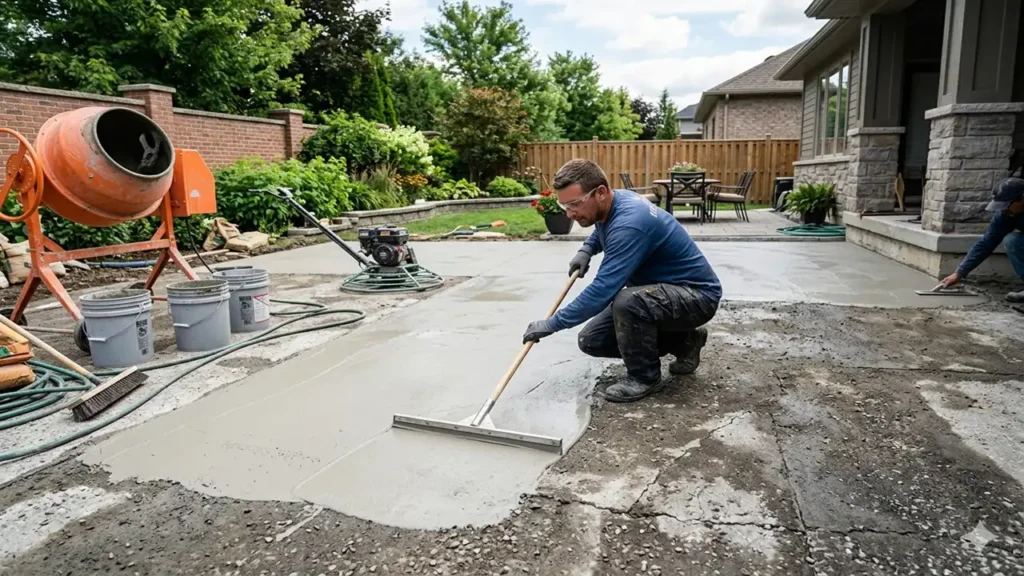
- Application: The resurfacer is spread using a squeegee or trowel. This is where decorative textures or stamps are added.
- Sealing: Once dry, a high-quality sealer is applied to protect the surface from UV rays, chemicals, and water penetration.
Maintaining Your Newly Resurfaced Concrete
Once your concrete resurfacing project is complete, you’ll want to protect your investment. Fortunately, maintenance is remarkably simple.
Regularly sweeping away debris and rinsing the surface with a hose will prevent dirt buildup. For deeper cleans, a mild soap is usually sufficient. To keep the colors vibrant and the protection strong, it is recommended to re-apply a clear sealer every 3 to 5 years depending on the amount of foot or vehicle traffic.
FAQ
How long does concrete resurfacing last?
When performed correctly by a professional and properly maintained, a resurfaced surface can last 10 to 15 years or even longer. The polymer-modified mixes used today are incredibly resilient against freeze-thaw cycles and heavy loads.
Precast Concrete Wall Repair: The Ultimate Guide for Homeowners
Can I resurface my concrete myself?
While DIY kits exist at big-box stores, concrete resurfacing is a race against the clock. The material sets quickly, and the preparation work (grinding and crack repair) is labor-intensive. For a finish that doesn’t peel or flake, hiring an expert is usually the better investment.
Can you resurface a driveway with heavy cars?
Yes! The overlays used in concrete resurfacing are specifically engineered to handle the weight of vehicles. In fact, many resurfacing products have a higher “PSI” (compressive strength) than the original concrete underneath.
Give Your Home a Fresh New Look Today
Don’t let ugly, cracked concrete drag down your home’s curb appeal. Concrete resurfacing offers a durable, beautiful, and budget-friendly way to transform your property without the headache of a major demolition. Whether you want a sleek modern garage or a Mediterranean-style patio, the possibilities are virtually endless.
Leave a Reply