


Have you ever walked up your driveway and tripped over a slab that wasn’t there last year? Or perhaps you’ve noticed a pool of water gathering near your foundation every time it rains. These aren’t just minor annoyances; they are signs that your ground is shifting.
In this guide, we’ll dive deep into concrete leveling. You will learn why concrete sinks, the most effective ways to lift it back into place, and how to decide between a DIY fix and calling in the pros. By the end, you’ll have the knowledge to protect your property’s value and keep your walkways safe.
Why Is My Concrete Sinking?
Before you can fix the problem, you need to understand the “why.” Concrete is incredibly heavy, but it only stays level if the soil beneath it is stable. Most issues requiring concrete leveling stem from three main causes:
- Soil Erosion: Heavy rain or poor drainage can wash away the dirt under your slabs, creating hollow “voids.”
- Poor Compaction: If the ground wasn’t properly packed down before the concrete was poured, it will naturally settle over time.
- Moisture Changes: In many regions, clay-rich soil expands when wet and shrinks when dry, causing the concrete above to heave and drop.
Ignoring these gaps can lead to more than just a stubbed toe. Water can seep into these voids and damage other structures, such as your cast iron drain cover and frame, eventually compromising your entire drainage system.
What is CIIIB in Construction?
Common Methods for Professional Concrete Leveling
When it comes to restoring a flat surface, you generally have two professional paths. Both are significantly cheaper and faster than tearing out the old concrete and pouring a new slab.
1. Mudjacking (Pressure Grouting)
This is the traditional method. Professionals drill small holes into the sunken slab and pump a “slurry” (a mix of water, soil, and cement) underneath. As the mixture fills the void, it creates enough pressure to lift the concrete.
2. Polyurethane Foam Injection
Often called “polyjacking,” this is the modern standard for concrete leveling. A lightweight polymer foam is injected through tiny holes. The foam expands rapidly, hardening into a waterproof, durable base that lifts the slab with incredible precision.
Concrete Leveling vs. Replacement: Which Is Better?
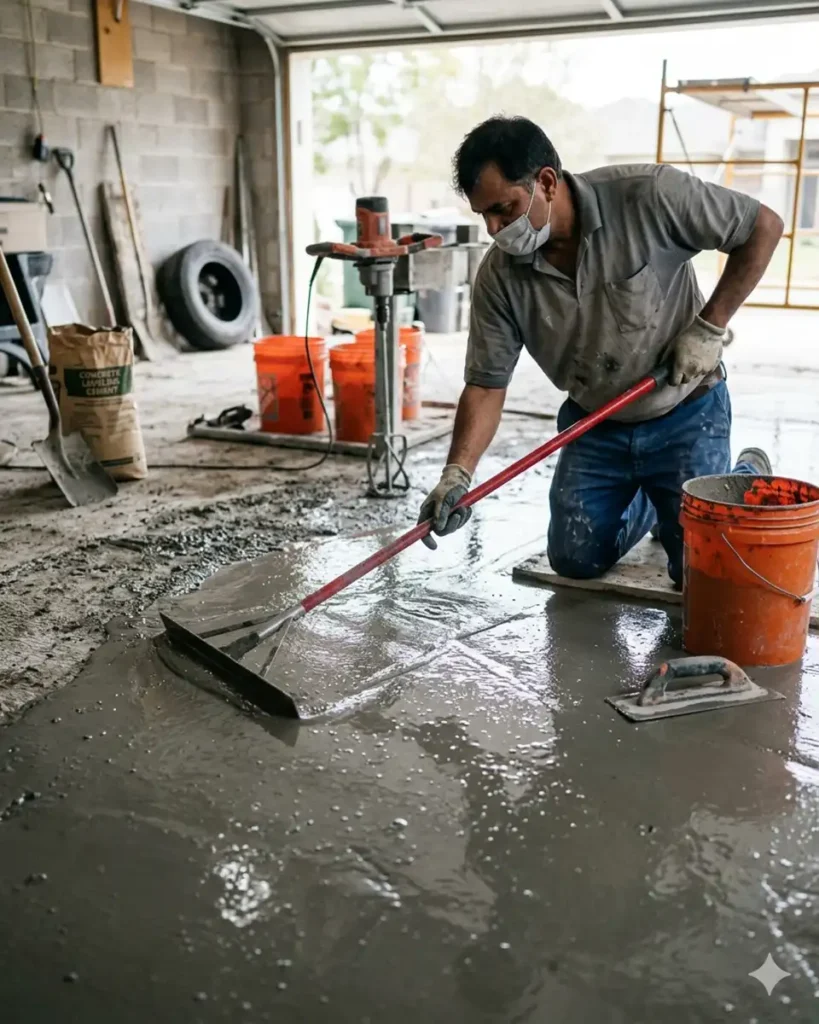
Homeowners often assume that a cracked or sunken driveway needs to be replaced entirely. However, concrete leveling is almost always the superior choice for several reasons:
- Cost-Effective: Leveling usually costs 50% to 70% less than a full replacement.
- Time-Saving: A leveling job typically takes a few hours, and you can walk on it almost immediately. Replacing concrete takes days of curing time.
- Eco-Friendly: By repairing your existing slab, you keep old concrete out of landfills and reduce the demand for new resource-heavy materials.
Pro Tip: If your concrete is crumbling into small pebbles or has “spiderweb” cracks everywhere, leveling won’t help. In those cases, the structural integrity is gone, and replacement is necessary.
Protecting Your Foundation with Proper Drainage
A major part of maintaining your newly leveled surfaces is managing water. If water continues to pool at the edge of your driveway or patio, the soil will erode again, undoing all your hard work.
To prevent future sinking, ensure your gutters are clear and that your downspouts are directed away from the concrete. Using high-quality concrete splash blocks is a simple, effective way to disperse water energy and prevent it from digging holes right next to your foundation. Proper drainage ensures that your concrete leveling investment lasts for decades rather than months.
Can You Do Concrete Leveling Yourself?
The DIY “itch” is real, but should you scratch it here?
While you can buy bags of “self-leveling underlayment” at hardware stores, these are designed for indoor floors before laying tile or laminate. They are thin toppings, not structural fixes. True concrete leveling—lifting a heavy outdoor slab—requires specialized hydraulic pumps or foam injection equipment.
Attempting to “patch” a height difference with a thin layer of concrete on top usually fails because the new layer will crack and flake off within a year. For long-term results, it is best to hire a specialist who can address the void underneath the slab.
Frequently Asked Questions
How long does concrete leveling last?
When done correctly using polyurethane foam, the repair can last as long as the concrete itself. Because the foam is waterproof, it won’t wash away like the soil did.
Is concrete leveling loud or messy?
Not at all. Compared to the jackhammers and heavy trucks required for replacement, leveling is very quiet. Polyurethane injection, in particular, is very clean and leaves only penny-sized holes that are patched to match your existing surface.
How much does concrete leveling cost?
Prices vary based on the size of the area and how much it has sunk, but most residential projects fall between $500 and $1,500. This is a fraction of the cost of a new $5,000 driveway.
Conclusion: Take Action Before the Crack Grows
Maintaining your home is all about addressing small problems before they become expensive nightmares. Concrete leveling is a smart, sustainable way to keep your property looking great and functioning safely. Whether you’re fixing a trip hazard on the sidewalk or leveling out a patio for summer BBQs, getting it done right will save you a headache down the road.
Leave a Reply