


Top Options: Comparing the Heavy Hitters
When builders and future homeowners ask me about the best hvac system for new construction, I always tell them there is no single “magic bullet.” The ideal choice heavily depends on your regional climate, upfront budget, and long-term energy goals. Let’s look at the top contenders in modern home building.
1. Air Source Heat Pumps (The Modern All-Rounder)
Heat pumps have rapidly become the go-to choice for new builds across the country. Unlike a furnace that creates heat by burning fuel, a heat pump simply moves heat. In the summer, it pulls heat out of your house (like an air conditioner). In the winter, it reverses the process, pulling ambient heat from the outside air into your home. Modern cold-climate heat pumps can operate efficiently even when temperatures drop below freezing, making them a highly versatile and energy-efficient option.
2. Traditional Split Systems (Furnace + A/C)
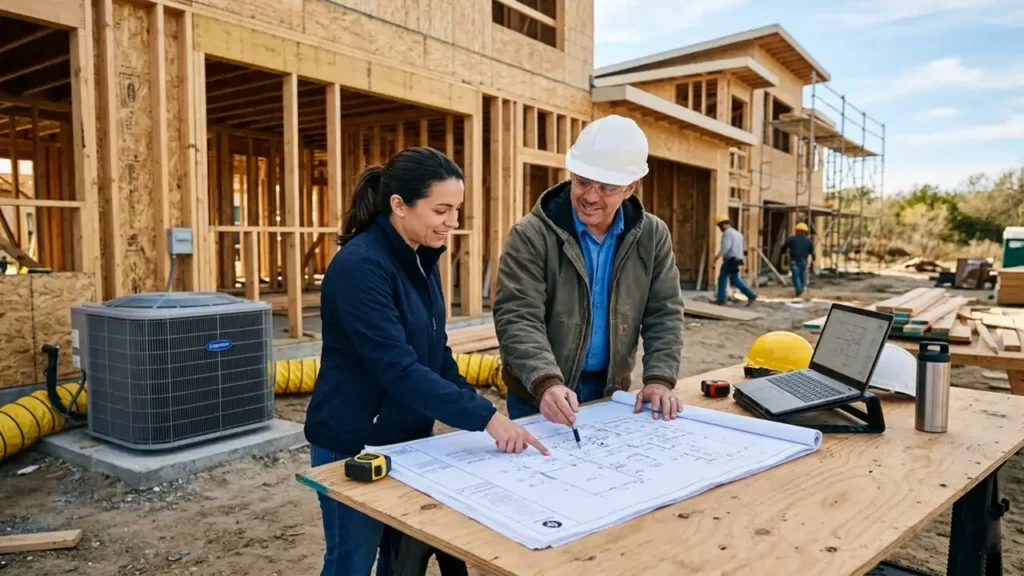
If you are building in a climate with incredibly harsh, freezing winters (think the Upper Midwest or Canada), a traditional split system might be your safest bet. This setup pairs an indoor gas or oil furnace with an outdoor air conditioning unit. It’s the classic workhorse of the industry. While it may not match the green energy profile of a heat pump, modern furnaces boast AFUE (Annual Fuel Utilization Efficiency) ratings of up to 98%, meaning almost no fuel is wasted.
3. Geothermal Heat Pumps (The Premium Investment)
If you have the land and the budget, geothermal is often considered the gold standard. Instead of pulling heat from the air, these systems utilize underground pipes to transfer heat to and from the earth, which stays at a constant 50–60 degrees year-round. It requires a significant upfront investment for the excavation and pipe loops, but it offers unparalleled efficiency, a near-silent operation, and a lifespan that far exceeds traditional units.
4. Ductless Mini-Splits (The Zoned Approach)
Who says you need massive sheet-metal ducts running through your whole house? Ductless mini-splits consist of a single outdoor compressor connected to multiple indoor air-handling units mounted on walls or ceilings. They allow for hyper-specific “zoning“—meaning you can keep the master bedroom at a crisp 68 degrees while leaving the unused guest room at 74 degrees.
Exposed Aggregate Concrete: The Ultimate Guide to Style and Durability
The Secret to Success: Proper Equipment Sizing
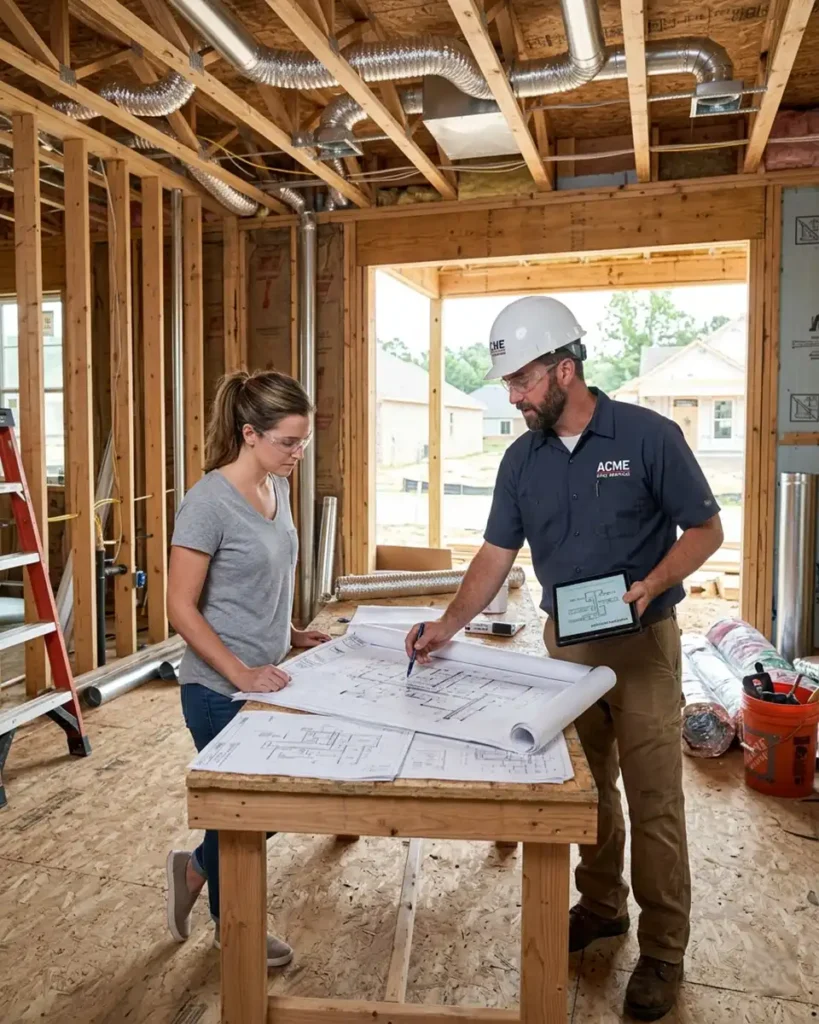
How do you properly size an HVAC system for a new house? To properly size an HVAC unit for a new build, contractors must perform a strict Manual J load calculation. This industry-standard formula factors in the home’s total square footage, ceiling heights, window placement and quality, insulation levels, and local climate data to determine the exact heating and cooling capacity required.
This step is absolutely non-negotiable. Even if you spend top dollar on the best hvac system for new construction, it will perform terribly if it’s the wrong size.
If a contractor tries to sell you an oversized unit “just to be safe,” walk away. An oversized unit will cool the house too quickly and shut off before it has a chance to remove humidity, leaving your home feeling cold and clammy. Conversely, an undersized unit will run continuously, driving your utility bills through the roof and burning out the motor prematurely.
Don’t Forget About Indoor Air Quality (IAQ)
Here is an insider tip that many new builders overlook: modern building codes require new houses to be incredibly “tight.” Builders use advanced wraps, spray foam insulation, and sealed windows to prevent energy loss.
While this is fantastic for your utility bills, it traps stale air, cooking odors, off-gassing from new carpets, and humidity inside the home. To combat this, your new system should incorporate mechanical ventilation. Consider adding an Energy Recovery Ventilator (ERV) or Heat Recovery Ventilator (HRV). These devices pull fresh air into the house while exhausting stale air out, transferring heat in the process so you don’t lose your climate control. Pair this with a high-MERV whole-home media filter, and you’ll have hospital-grade air quality from day one.
Frequently Asked Questions
What is the best hvac system for new construction if I want maximum energy efficiency?
If budget allows, a geothermal heat pump provides the absolute highest efficiency and lowest long-term operating costs. If geothermal is out of your budget, a high-efficiency (18+ SEER2) variable-speed air-source heat pump is the next best choice for eco-conscious builders.
Concrete Blankets: The Essential Guide to Winter Curing and Protection
Should I place my ductwork in the attic?
Try to avoid it if possible! One of the biggest advantages of new construction is that you can design the home to keep ductwork inside the “conditioned envelope” (like a sealed crawlspace or dropped ceilings). Pumping cold air through 120-degree attic ducts is a massive waste of energy.
How much should I budget for a brand-new installation?
Costs vary wildly based on the size of the home, the region, and the type of system. On average, a standard split system or heat pump with new ductwork will run between $8,000 and $15,000. Premium geothermal systems can easily range from $20,000 to $40,000+ before tax incentives.
Concrete Price per Yard: A Complete Guide to Costs and Planning
Making Your Final Decision
Wrapping up a new build is a marathon of decision-making. By focusing on your heating, cooling, and ventilation strategy early in the design process, you will save yourself massive headaches and thousands of dollars down the road.
Ultimately, determining the best hvac system for new construction comes down to partnering with a knowledgeable, experienced contractor who understands the unique physics of your specific floor plan and regional climate. Don’t settle for rule-of-thumb estimates; demand precise calculations and a custom-tailored design.
Leave a Reply