



What is Acid Stain Concrete?
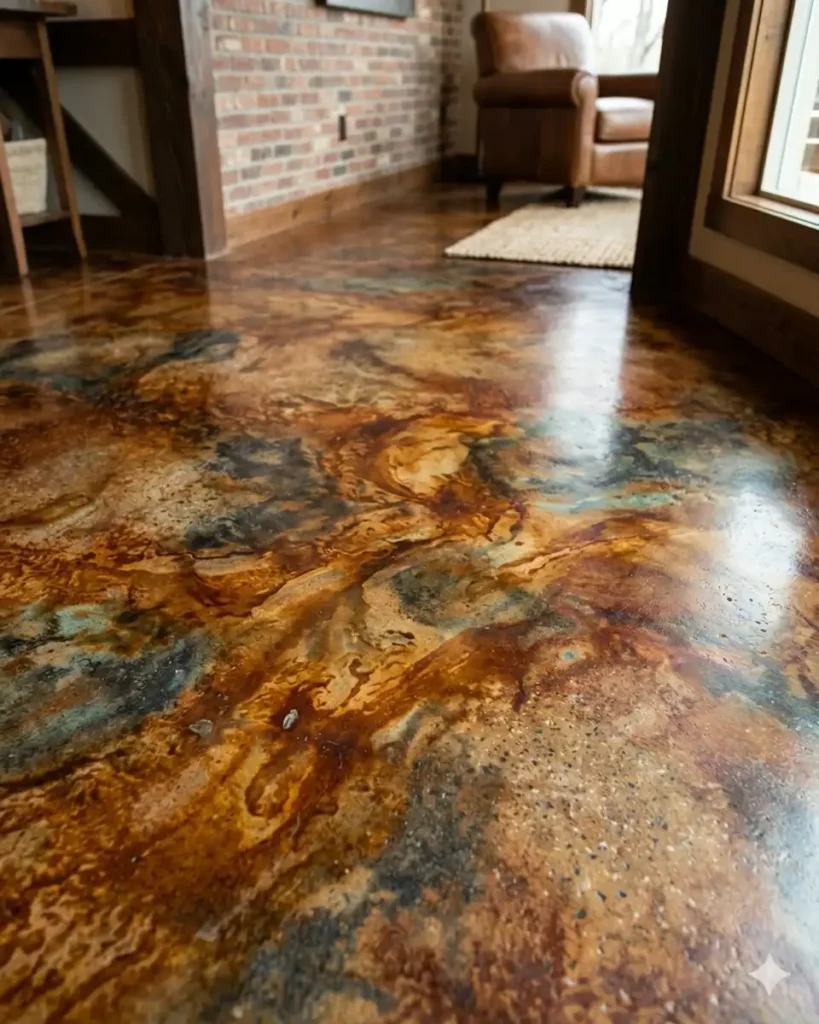
Unlike paint or topical coatings that sit on the surface, acid stain concrete is a reactive coloring process. The solution is typically made of water, hydrochloric acid, and acid-soluble metallic salts.
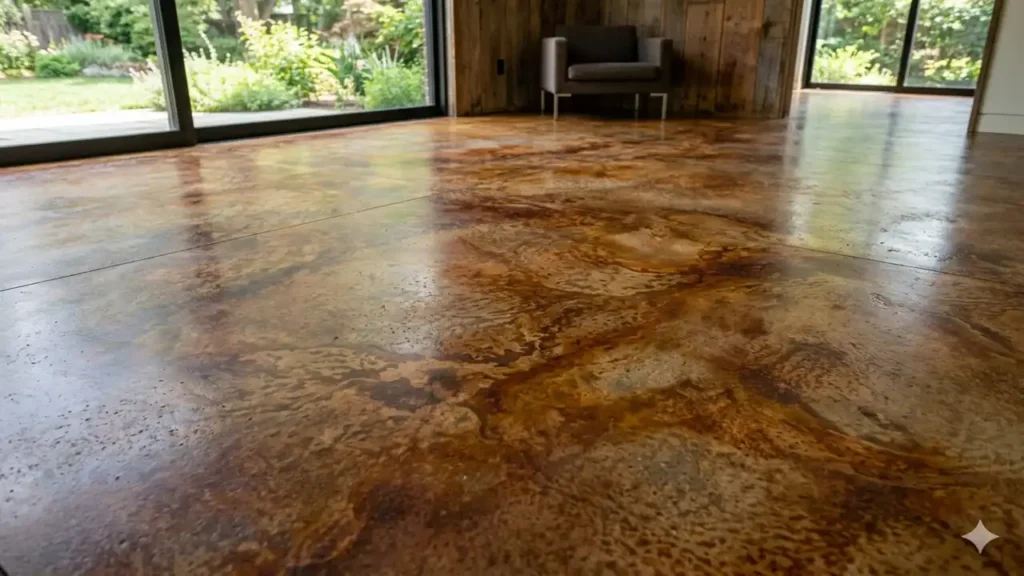
When applied, the acid lightly etches the surface, allowing the metallic salts to penetrate the concrete. These salts react chemically with the calcium hydroxide (lime) in the concrete to create permanent, translucent color. Because every slab has a different chemical makeup and porosity, the result is a one-of-a-kind mottled effect that offers depth and character that no “flat” paint can replicate.
The Unique Benefits of Acid-Stained Surfaces
Choosing acid stain concrete isn’t just about aesthetics; it’s a practical choice for homeowners and commercial property managers alike.
- Unmatched Durability: Since the color becomes part of the concrete itself, it won’t chip, peel, or flake off like paint.
- UV Resistance: Acid stains are generally more fade-resistant than water-based dyes, making them ideal for outdoor patios and walkways.
- Cost-Effectiveness: Compared to installing hardwood, marble, or high-end tile, staining your existing slab is significantly more affordable.
- Hypoallergenic: Stained concrete doesn’t trap dust, dander, or mites, making it a “breath of fresh air” for allergy sufferers.
The Step-by-Step Application Process
Achieving a professional look with acid stain concrete requires patience and meticulous preparation. If you skip the prep, the stain won’t take.
Average Concrete Slab Cost in 2026
1. Surface Preparation
The concrete must be porous and clean. You need to remove any grease, oil, sealers, or drywall mud. A simple “water test” can tell you if you’re ready: drop water on the slab; if it beads up, there is a sealer present that must be ground off.
2. Application
Using an acid-resistant pump sprayer, apply the acid stain concrete solution in a circular motion. Avoid “puddling” the liquid. You’ll often see a “fizzing” sound and some bubbling that’s the chemical reaction at work!
3. Neutralization and Rinsing
Once the stain has sat for the recommended time (usually 4 to 8 hours), you must neutralize the acid using a mixture of water and baking soda or ammonia. This stops the reaction and brings the pH level back to a safe point. Scrub the floor and wet-vac the residue until the rinse water runs clear.
4. Sealing and Waxing
To make the colors “pop” and protect the finish, apply a high-quality sealer. For indoor floors, adding a sacrificial coat of floor wax provides an extra layer of protection against scratches.
Design Ideas: From Rustic to Modern
One of the best things about acid stain concrete is its versatility.
- The Old World Look: Use “Terra Cotta” or “Coffee” tones to create a Mediterranean feel.
- Modern Industrial: Use “Graphite” or “Black” stains with a high-gloss sealer for a sleek, urban aesthetic.
- Faux Tile: You can use a circular saw or a decorative groover to cut shallow lines into the concrete before staining. When the stain is applied, these lines act as “grout” lines, giving the appearance of large-format stone tiles.
Common Myths About Staining Concrete
There are a few misconceptions that often lead to confusion for first-timers:
- “It covers cracks”: False. Acid stain concrete is translucent. It will actually highlight cracks and imperfections. However, many people love this because it adds to the “natural stone” look.
- “The color is predictable”: Not exactly. Since it depends on the concrete’s chemistry, the color on the bottle is just a guideline. Always do a small test patch in an inconspicuous area.
Maintenance: Keeping Your Floors Pristine
Maintaining acid stain concrete is remarkably easy. For interior floors, a simple damp mop with a pH-neutral cleaner is all you need. Avoid harsh chemicals like bleach or vinegar, as these can eat through the sealer over time. If the floor starts to look dull after a few years, a fresh coat of wax or a reseal will bring the luster back instantly.
Spalling Concrete: Causes, Prevention, and Expert Repair Solutions
FAQ
How much does acid stain concrete cost?
Typically, a DIY project costs between $0.50 to $1.50 per square foot for materials. Professional installation usually ranges from $4 to $10 per square foot, depending on the complexity of the design and the amount of surface prep required.
Can I stain old concrete?
Yes! As long as the concrete is structurally sound and free of sealers or contaminants, old concrete can be stained. In fact, older concrete often has more “character” in its reaction than brand-new slabs.
Is acid staining permanent?
Absolutely. Because the chemical reaction penetrates the surface, the color will last as long as the concrete does. However, the protective sealer on top will need to be reapplied every 3–5 years depending on foot traffic.
Transform Your Space Today
Acid stain concrete offers a rare combination of artistic beauty and industrial-strength durability. It’s an investment that adds value to your home while providing a surface that is easy to clean and stunning to look at. Whether you are a weekend DIY warrior or looking to hire a pro, the results are bound to impress.
Leave a Reply