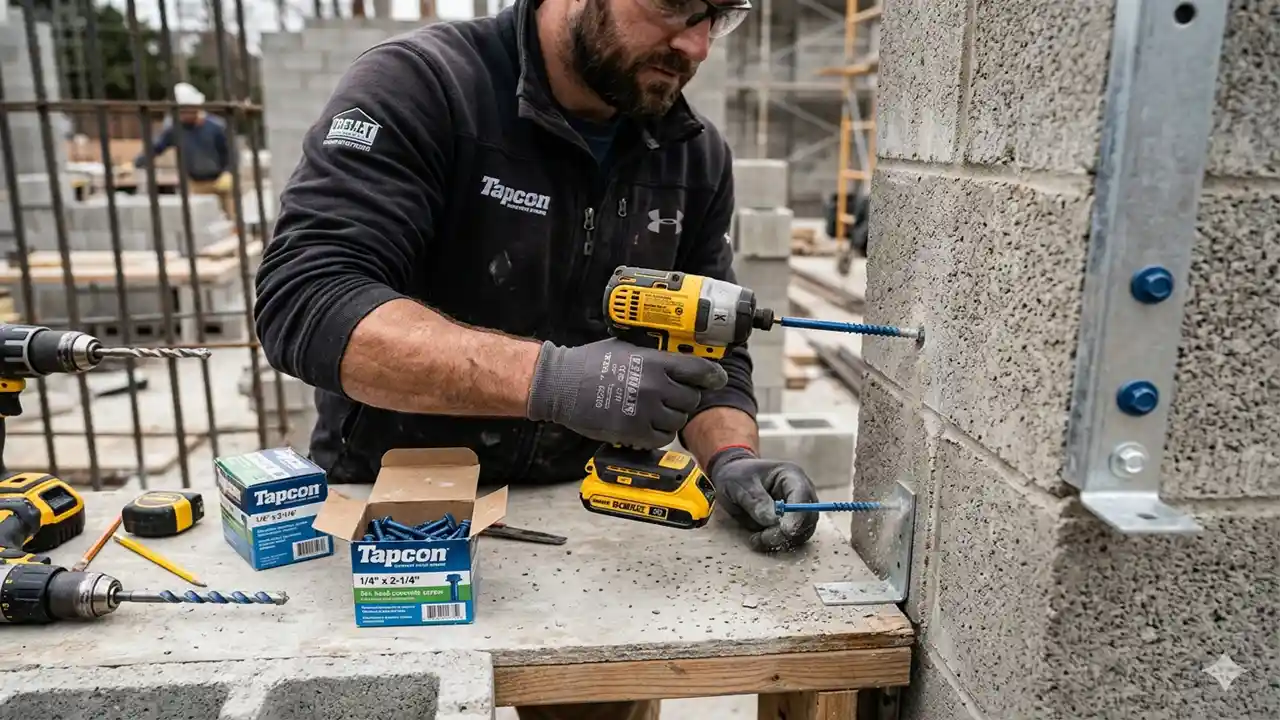
What Are Concrete Screws and How Do They Work?
At first glance, a concrete screw might look like a heavy-duty wood screw, but its metallurgy and thread design are engineered for extreme environments. Most high-quality concrete screws feature a “hi-lo” thread pattern. This consists of a high, sharp thread that cuts into the masonry and a lower thread that provides stability and helps clear out dust.
Most of these fasteners are finished with a specialized coating often blue designed to resist the corrosive lime found in cement. When you drive these screws into a pre-drilled hole, the threads create a permanent path in the material, distributed along the entire length of the shank. This is why concrete screws are often preferred over plastic anchors; they offer superior pull-out resistance and can be installed much closer to the edge of a slab without cracking it.
Choosing the Right Concrete Screws for Your Project
Not all masonry projects are created equal. To get the best results, you need to match the fastener to the material and the load.
Head Styles: Hex vs. Phillips
- Hex Head: Best for heavy-duty applications where you need maximum torque. The washer-face design sits on top of the material, providing a large bearing surface.
- Flat Head (Phillips or Star): Ideal for projects where you need the screw to sit flush with the surface, such as attaching furring strips or door frames.
Material and Length
When selecting concrete screws, the “rule of thumb” for length is the thickness of the item you are fastening plus a minimum of 1-inch (and a maximum of 1.75-inches) of embedment into the concrete. If you go too shallow, the screw won’t hold; go too deep, and you risk the screw snapping due to excessive torque or dust buildup.
Substrate Compatibility
While they are called concrete screws, they are also highly effective in:
- Poured concrete
- Concrete block (CMU)
- Brick and mortar joints
- Stone
Step-by-Step Installation: Getting it Right the First Time
The most common reason concrete screws fail isn’t the screw itself it’s the installation process. Follow these steps to ensure a rock-solid connection.
Why This New Dells Resort Construction Milestone Matters
1. Drill the Pilot Hole
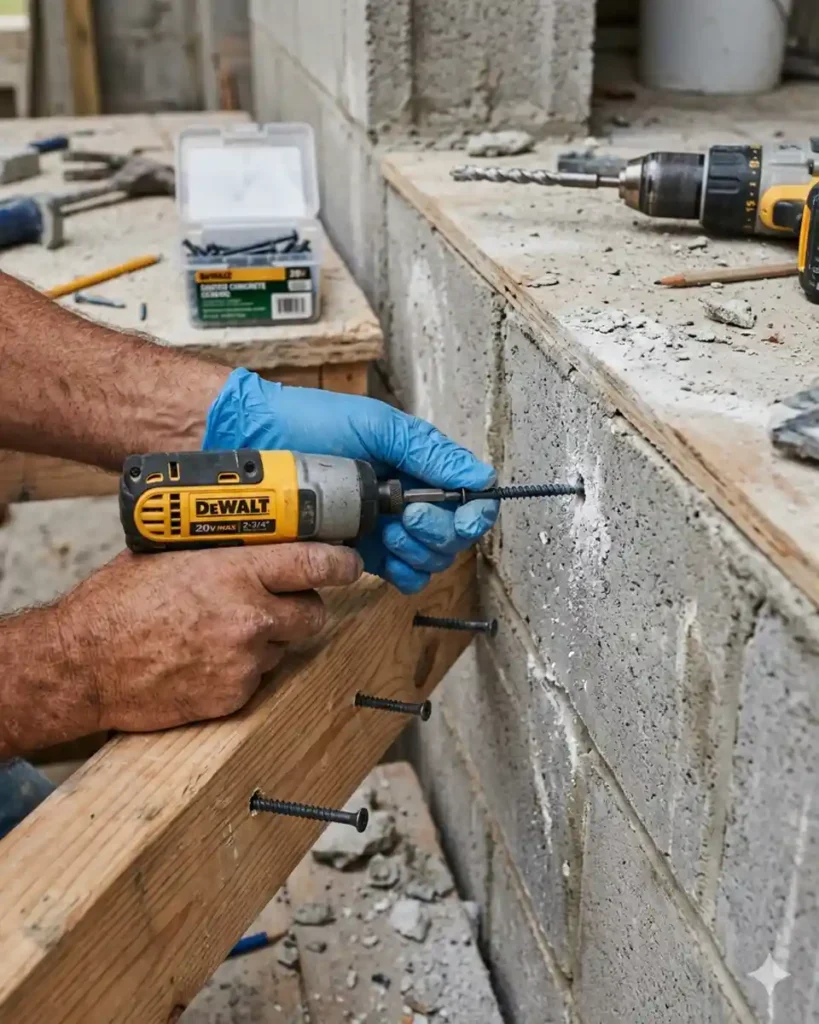
You cannot drive these screws without a pilot hole. You must use a hammer drill and a carbide-tipped masonry bit. Most packs of concrete screws come with the correctly sized bit included.
Pro Tip: Drill the hole 1/2-inch deeper than the screw will actually penetrate. This provides a “dust pocket” so the screw doesn’t bottom out on debris.
2. Clean the Hole
This is the step most people skip. Use a vacuum, a blow bulb, or even a can of compressed air to remove the concrete dust from the hole. If dust remains, it can compact at the bottom, causing the screw to seize or snap before it is fully seated.
3. Drive the Screw
Use a standard drill-driver or an impact driver to seat the screw. If you feel the screw becoming excessively tight, back it out slightly to clear any remaining dust and then continue. Avoid over-torquing; once the head is snug against the material, stop.
Troubleshooting Common Issues with Masonry Fasteners
Even pros run into trouble occasionally. Here is how to handle the two most common headaches:
The Screw “Spins Out”
If you over-tighten the screw and it strips the threads in the concrete, it will spin freely. If this happens, you cannot simply put a larger screw in the same hole. You’ll need to move the fixture slightly and drill a new hole, or use a specialized epoxy to set the fastener.
The Screw Snaps Off
This usually happens because the pilot hole wasn’t deep enough or was filled with dust. If the head snaps off, the remaining shank is nearly impossible to remove. Your best bet is to grind it flush with the surface and move your attachment point.
Maintenance and Corrosion Resistance
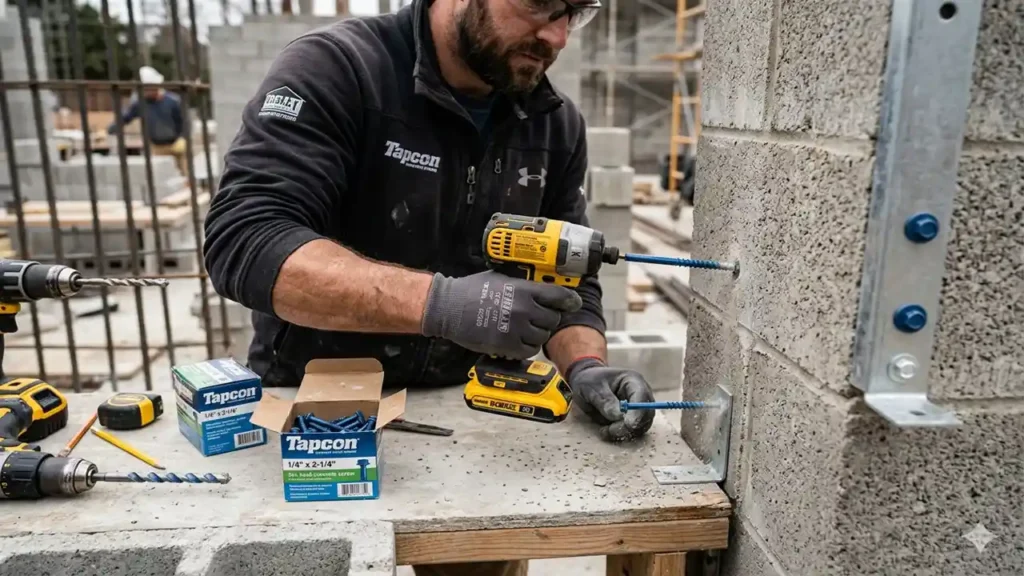
If you are working outdoors such as building a deck or installing a gate you must use concrete screws with a high-grade exterior coating. While the standard blue coating is excellent for most indoor uses, stainless steel versions are recommended for coastal areas or projects involving pressure-treated lumber, which contains chemicals that can eat through standard coatings.
The Ultimate Guide to Concrete Sealer
FAQ
Can I reuse concrete screws?
It is generally not recommended. The threads on concrete screws do a lot of work cutting into the masonry during the first installation, which can dull the leading edges. For a secure, structural hold, always use a fresh screw.
What size drill bit do I need for a 3/16″ screw?
For a standard 3/16-inch concrete screw, you typically need a 5/32-inch masonry bit. For a 1/4-inch screw, use a 3/16-inch bit. Always check the manufacturer’s packaging to confirm.
Can I use a regular drill instead of a hammer drill?
While a regular drill will eventually get through brick or soft mortar, it will struggle immensely with poured concrete. A hammer drill uses a “pulsing” action that breaks the aggregate, making the process faster and preventing your drill bits from overheating.
Build with Confidence
Using concrete screws is one of the most efficient ways to tackle masonry projects. By choosing the correct length, drilling a clean pilot hole, and avoiding over-torque, you can achieve a professional-grade finish on everything from home repairs to major renovations.
Ready to start your next project? Head to your local hardware supplier and pick up a pro-pack of concrete screws. With the right tools and the techniques shared today, you’ll find that “hard” surfaces aren’t so difficult to work with after all.