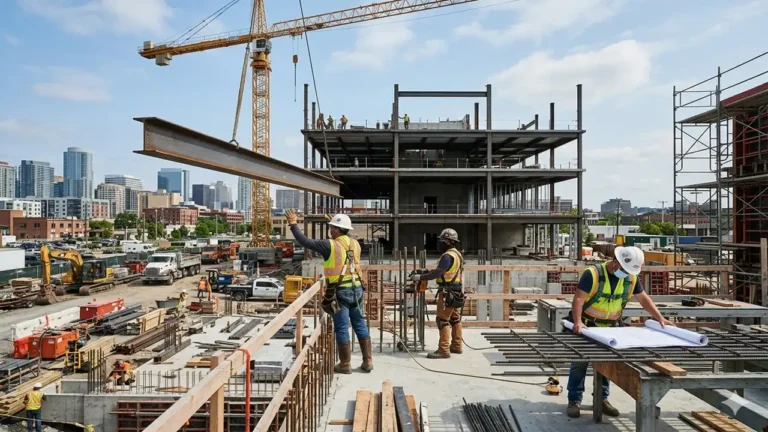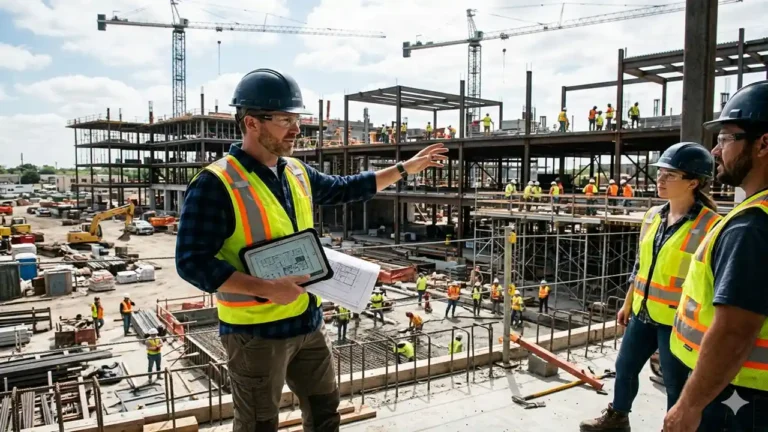
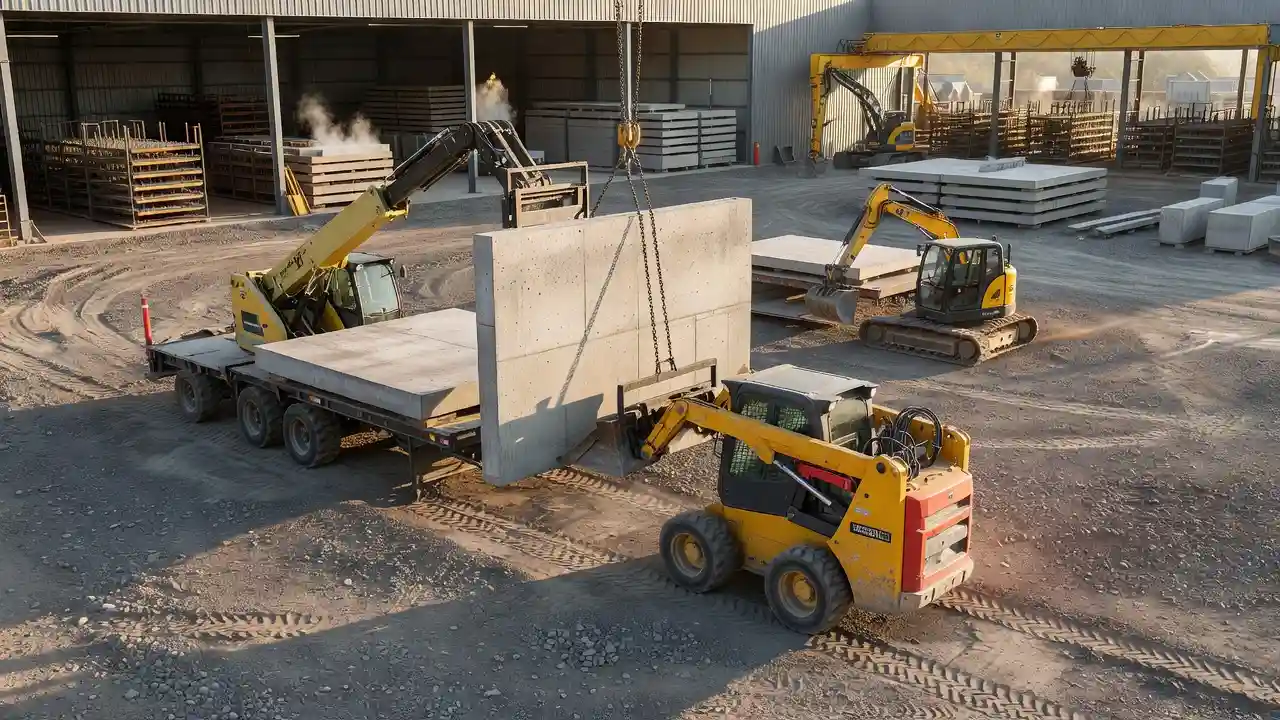
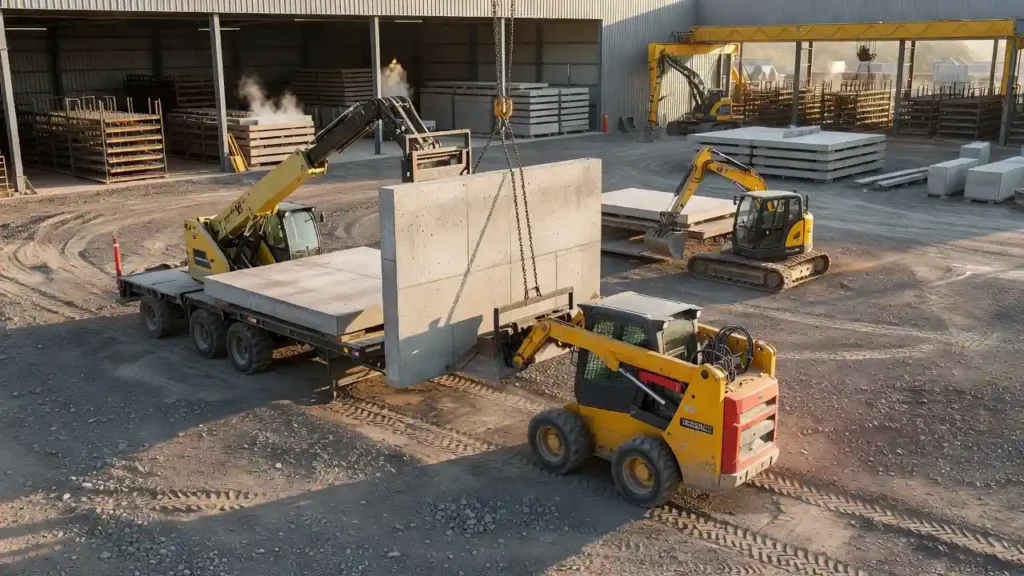
Compact construction equipment is reshaping how precast concrete projects get built, staged, and delivered across the Midwest.
Contractors who once relied on full-scale machinery are discovering that smaller, more agile equipment is cutting labor hours, reducing site damage, and improving placement precision on structural framing jobs where space is always at a premium.
Reflexive Constructions Driving Smarter Precast
Key Takeaways
- Compact construction equipment reduces site preparation time by up to 30% on precast concrete installations
- Smaller machine footprints protect structural staging zones and finished grade areas during active pours
- Midwest contractors report measurable cost savings when integrating compact equipment into precast erection sequences
Why Are Precast Contractors Switching to Compact Machines?
If you’ve been following precast concrete trends across the Midwest, this won’t come as a surprise.
Job sites are getting tighter.
Urban infill projects, school additions, and municipal infrastructure builds are demanding that contractors do more with less physical room to maneuver.
Our team has observed a consistent pattern on precast structural framing projects: traditional full-sized equipment often creates more problems than it solves.
Wide turning radii damage prepared subgrades.
Heavy outrigger footprints crack finished flatwork that’s been placed just days earlier.
According to the Association of Equipment Manufacturers, the compact equipment segment is one of the fastest-growing categories in North American construction — and precast applications are a primary driver of that growth.
National Building Construction Corporation
What Does Compact Construction Equipment Actually Deliver on a Precast Site?
Compact construction equipment — including compact track loaders, mini cranes, and telehandlers under 10,000 lbs — offers a specific set of advantages when you’re moving, staging, and setting precast panels, beams, and structural members.
Our analysis suggests the biggest gains come from three operational areas:
- Reduced ground disturbance during panel staging and erection
- Faster repositioning between picks on multi-panel wall systems
- Lower fuel and transport costs because compact machines are easier to haul between project sites
Construction industry insiders are noting that the push toward modular precast systems is directly accelerating compact equipment adoption.
When your precast wall panels arrive in sequenced lifts, you need equipment that moves fast between bays, not a machine that requires a 20-minute repositioning every time a new panel gets craned in.
Compact vs. Full-Scale Equipment: A Direct Comparison
| Feature | Compact Equipment | Full-Scale Equipment |
|---|---|---|
| Operating Weight | 3,500 – 10,000 lbs | 18,000 – 60,000+ lbs |
| Turning Radius | 8 – 12 ft | 20 – 35 ft |
| Transport Requirements | Standard flatbed | Oversize load permits |
| Fuel Consumption (per shift) | 4 – 8 gallons | 15 – 30 gallons |
| Site Damage Risk | Low | Moderate to High |
| Precast Panel Staging Speed | High | Moderate |
| Setup Time Per Pick | 5 – 10 minutes | 15 – 30 minutes |
Our contractors note that on projects involving 200 or fewer precast panels, compact equipment almost always outperforms larger machines on a cost-per-pick basis.
The Federal Highway Administration’s construction resource library has also documented how smaller equipment categories reduce ancillary site damage costs on infrastructure-adjacent builds.
How to Integrate Compact Construction Equipment Into a Precast Project: Step-by-Step
Follow this sequence when planning compact equipment use on a structural precast job:
Step 1 — Define Your Panel Weight Range
Identify the heaviest precast element on the project.
Ensure your selected compact equipment’s rated lift capacity exceeds that weight by at least 25% for a safe working margin.
Step 2 — Map Your Staging Zones
Lay out precast delivery zones on your site plan before the first truck arrives.
Compact equipment operates best when staging areas are within 50 feet of the final set location.
Step 3 — Confirm Ground Bearing Capacity
Always verify that your subgrade can support equipment loads during wet or freeze-thaw conditions.
The U.S. Army Corps of Engineers geotechnical guidance provides soil bearing tables applicable to most Midwest site conditions.
Step 4 — Sequence Equipment Moves With Panel Delivery
Coordinate your compact equipment operator’s schedule directly with your precast supplier’s delivery manifest.
Eliminating equipment idle time between picks is where real cost savings accumulate.
Step 5 — Conduct a Daily Pre-Shift Safety Audit
Review outrigger positions, hydraulic line integrity, and load line condition before every shift.
OSHA’s construction equipment safety standards provide the baseline checklist framework our teams use on every precast erection project.
Koi Pond Construction Right With Precast
Compact Construction Equipment Drives Precast Efficiency
— US News (@Us_news_ways) July 15, 2026
Compact construction equipment is reshaping how precast concrete projects get built, staged, and delivered across the Midwest.@JohnDeere @BobcatCompany @constructi37402 https://t.co/7RvO8Hsq4Q
How Will This Impact Your Next Midwest Precast Build?
Compact construction equipment is no longer a workaround for sites that couldn’t accommodate larger machines.
It has become a deliberate, engineered choice that Midwest precast contractors are making to protect finished work, reduce costs, and meet tighter project schedules.
Our contractors have seen firsthand that projects using compact equipment during precast erection phases consistently finish panel installation sequences 15–20% faster than comparable projects relying exclusively on full-scale machinery.
The Precast/Prestressed Concrete Institute continues to publish erection best practices that increasingly reference compact lifting and handling equipment as standard methodology not an exception.